Latest Posts

How I learned to stop worrying and love Nanowrimo

Two years ago, I watched my husband do Nanowrimo. I mostly lounged around, chatted with other people, drank red wine, and was probably, in hindsight, entirely obnoxious and distracting. I certainly didn’t track any progress. Mike didn’t seem to enjoy doing the write-ins and didn’t think they were helpful. We stopped.

This year I’m trying out Nanowrimo myself, although I admit I’m kind of cheating. I would have been writing anyway — I have two novels whose first drafts I was planning to finish this month, so I thought ‘why not combine these goals?’ This probably not quite playing by kosher rules, I’m sure, even if I’m not ‘counting’ any words that I didn’t write during this month (my total on Nanowrimo’s site, for example, is far lower than the count that I’m listing here on my blog.)  But now that I’ve actually been to a write-in with the intent to write — now I understand why my husband didn’t really like them as other than social circles. Not much writing seems to get done there, especially if a bunch of people who are really truly friends with each other show up. I can’t blame folks for chatting with their friends.

Well, I can but I recognize the hypocrisy.

I’ve read a lot of blog posts this month about Nanowrimo too. Most of them positive, but at least a few pretty critical, and almost entirely containing very good points about the pros and cons of this event (I say almost because Laura Miller’s Salon article on Nanowrimo was awful, and Chuck Wendig has my back on that one.) It’s my personal belief that anything that encourages people to sit down and write, that shows people how to slog through the blocks, develop good habits, and learn to consistently put words on the page every single damn day is an awesome, wonderful thing. Of course, it’s also my personal belief that anything that subtly reinforces the idea that you can ONLY write a novel in the month of November should be killed with fire.

So…don’t take away that last lesson. Cool? Cool.

Here’s what is, in my opinion, the best thing about Nanowrimo: proving to yourself you can do it. I don’t think it matters if what you write is good or bad or the next Water for Elephants or The Night Circus (both, as I understand it, came out of Nanowrimo) but only that you’ve proved to yourself that you do indeed have the cajones to write an entire book. This light flashes on as you realize it can be done, that it’s a marathon with a finish line that can be crossed in 30 days (or less than 30 days). Writing a book is not magic. Writing a book is not rocket science. It’s possible. It’s possible for you or me or anyone who wants it badly enough.

Once you’ve done it once, you know you can do it again.

Nanowrimo isn’t, in my opinion, about good. Good happens 365 days a year. Good happens with a lot of practice and dedication. Good happens with the realization that your first book doesn’t have to be some magic masterpiece but it does have to be finished. Good happens when you give yourself permission to keep writing through the bad until bad decides its tired of this game and you’re no fun anymore, leaving good behind eager to start this shit up.

Nanowrimo is about teaching you how to finish a book so you can begin the next one. You learn by doing, which is a more effective teacher than all the blog articles in the world shouting that yes, yes you, you can do this.

So I get why agents and editors despair upon hearing that a book had its start at Nanowrimo, especially immediately after Nanowrimo has finished. The word count is all, and that’s not really an idea that necessarily births publishable quality. But you never know. I mean seriously, when Dashiell Hammett wanted to write a book his sobered up, put a roll of paper in his typewriter (god, he’d have loved computers) and wrote continuously without sleep for an entire weekend until there was a manuscript sitting in front of him. So much as part of me wants to mock those Nanowrimo writers who wrote 50,000 words in ONE DAY, I can’t bring myself to do it. Maybe what they wrote is awesome. Maybe it’s awesome and they have 29 days to proof and edit, and isn’t the joke just on me then, huh?

Point is, they got it done, and whatever helps you get it done is to be lauded, not mocked.

Just remember that, for a writer, every month is November.

The Bonehead Writing Society

(Note: this post is a reprint of an earlier post that appeared on a shared blog, There By Candlelight. Since that site is now being repurposed, I’m slowly moving my articles over here.)

Blank paper is God’s way of telling us it’s not so easy to be God. – Craig Vetter

Some years ago (I really don’t want to think of how many years ago it’s been) I decided to take an English 101 night class at the local community college. Everyone else in the city of Santa Monica had evidently had the same idea, because when I walked in the door I found there were easily over 60 people crammed into a small airport building with 30 seats. Many of us were working adults, but there were clearly some collect students in their late teens who believed that a night class would have less homework and would thus be an easy A.

We stood and fidgeted and gave each other anxious looks, and at five minutes past the hour, our teacher arrived, one Bob Reichley. Bob was a tall, good-looking man who reminded me a little of Hugh Laurie (including the wickedly sharp sense of humor.) He started the class by skipping attendance and handing out a syllabus so strict Catholic nuns would have looked at it and blanched: down a whole grade for being late on a single paper, down two grades a second time, third time failed the class.

Once that was done, and we were left blinking at the photocopies in front of us — my god, he can’t be serious, can he? — he passed out another photocopy, this a one-page excerpt from Playboy Magazine, which he then proceeded to read out loud.

Bonehead Writing by Craig Vetter

Go ahead and read it. It’s only 900 words. I’ll wait.

Bob had a lovely speaking voice, the sort that comes from long practice and a fair amount of alcohol (we would later learn that his informal off-work ‘office’ was the bar of a nearby restaurant.) The article has a lot of dry humor to it, so we dutifully laughed.

Nervously laughed.

The point of the article was, after all, was that we couldn’t write and he couldn’t teach us, that writing is the path of pain and suffering and always will be. That’s an odd thing for an English teacher to point out at the beginning of a semester, no matter how true it is — and it is true. Absolutely, agonizingly true.

Then he let us out for a break.

Only 30 students bothered to come back when the break was over, and only then did he take attendance. By the end of the semester, the class of 30 was down to 12. Not quite enough to fit comfortably comfortably in the back of Bob’s car, but we had no problem finding seats in class. I asked him later about that syllabus, and he revealed the secret: all you had to turn in to be ‘on time’ was a blank sheet of paper with your name on it. He wanted to make a point about deadlines (while simultaneously scaring off the riff-raff) and about the process of writing, namely that it is a process — a series of edits, re-writes, assessments, critiques and refinements rather than one single impossibly perfect finale. The lesson was effective, and to this day I consider Bob’s class one of the most engaging, rewarding and educational experiences I’ve ever been privileged enough to experience.

I’m deeply amused to note that Craig Vetter’s brief magazine column on writing has experienced a kind of immortality on the internet, passed around in writing circles and on various forums. I will on occasion mention the article to people when the subject of writing comes up, and sometimes to my amazement people know exactly what I’m talking about — they’re always equally astonished that I know about it too, as if this is something so obscure and arcane that it constitutes a secret society, a cherished set of holy rules and warnings that only writers can understand. I can’t imagine what our secret handshake would be, but I have to imagine we would meet in local bars, at separate tables, and talk to each other little, if ever. (Thank you, waitress, I’ll have a gimlet. Of course with gin, you heathen.) No, I’m probably not giving us enough credit — misanthropes though we writers may sometimes be, we still like being able to kvetch with our own kind, yes? So perhaps we’d simply commiserate on what nasty, dirty, hard work writing is, all to create something that at the end of the day may not be any damn good at all, and how much we love it for that.

If nothing else, we could compare our tattoos.

Tall Poppies

I hate Mary Sues.

It’s not, however, for the reason that you might think. We’ve all encountered Mary Sue characters — a product of fan fiction (typically an author insert) who can do everything, fix all problems, knows everything and knows exactly how to solve any given mystery. In my experience, Mary Sues are often not perfect, but charmingly flawed (so clumsy!) and very often that flaw ensures she is always the center of attention. Everyone loves her because the author wants it that way rather than because she is, in fact, lovable.

But at some point (I’m honestly not sure when) the Mary Sue shifted away from wish-fulfilling author insert to a woman who was good at too much. Quelle horreur!

I had a sneaking suspicion when I wrote Marduk’s Rebellion that I was going to hear that accusation leveled against the main character, Mallory MacLain. She is, by her nature, a highly skilled, badass kind of character: a super agent who neither wants nor arguably needs much support. She’s a loner, and she has the skill set to pull that off (or a least she’s convinced herself of this.) A friend of mine, with the best of intentions, came to me mid-read on the book and said, ‘Aren’t you concerned that people are going to think she’s a Mary Sue?’

I admit I was waiting for the accusation. I was dreading it. My friend certainly didn’t deserve the way I snapped his head off in response (Sorry!)

Here’s the thing though: I’ve had this feeling for a while that lurking underneath the ‘Mary Sue’ label is something kind of ugly. Here, I’ll give you some examples:

  • Batman
  • The Shadow
  • Doc Savage
  • Iron Man
  • Doctor Who

(There are plenty more out there.)

I grew up on these guys and it honestly never occurred to me that there was anything wrong with these multi-talented, skilled men of action. Yes, they were virtual demi-gods, but I didn’t read pulps or comics to read about normal ‘realistic’ people. And I loved it when their strengths so often became their weakness.

So I have heard it said that these characters are the male equivalents of Mary Sues (Gary Stues) but honestly, it’s not a accusation that’s leveled very often. Most of the time, these characters are given a pass and a high-five by men and women alike.

Always be yourself, as the meme says, unless you can be Batman. Then always be Batman.

But the female equivalent of these gentlemen is invariably labeled a Mary Sue, as my friend worried my main character would be.

See the problem?

Now someone can point out that any character who has no flaws is boring, and I can’t argue with that. I totally agree. The characters I named above all have flaws, usually flaws of personality rather than physical or mental aptitude. They are tortured souls, whose skill, intelligence and powers can’t bring them solace, bring back loves lost, or ease the guilt of the crimes abetted. (Heavy is the head that wears the crown, or cowl, or sonic screwdriver.) And that’s what Mallory is too. It’s exactly what Mallory is. The decision to make her that was very intentional, precisely because I was having a really hard time thinking of any female equivalents of these men (no, Catwoman is NOT the female equivalent of Batman.) We take such care as writers to make sure our women are good…but not too good.

Many years ago, I worked for a brilliant woman from New Zealand who introduced me to the idea of ‘tall poppies’ (which Wikipedia tells me is a gender neutral pejorative, but which she had insisted was, at least in her hometown, only applied to women.) A tall poppy was slang for a person who was too successful, too pretty, too smart, too whatever. A tall poppy stands out from all the other flowers, making them look short by comparison. And what do you do with a tall poppy?

You cut it down.

So I wonder, sometimes, if we have made the definition of Mary Sue so broad as to cover not only those character inserts from fan fiction to whom it originally applied, but any female character who wants to tread the same path as men have tread previously. Are we too quick to levy this accusation? I think so. I think it’s worth a hard look at the fact that we’re quick to apply this label to women but we have to go all the way over to Superman to see it consistently applied to a male. If we really want to start addressing equality in science-fiction and fantasy, we need to become a little more comfortable with the idea that women too can fill these rolls.

So IS Mallory MacLain a Mary Sue?

Well…she’s a psychic assassin-trained genius with her own personal AI, all the cool toys, a tortured soul, and a problem with abusing various vices to cover for her searing guilt over her past. She kicks ass, takes shit from exactly no one, and is arrogantly convinced of her rightness in all things, with horrific consequences whenever she is proved wrong. She doesn’t always make the right decision. She doesn’t always win. She let’s people down. Sometimes she’s downright selfish and does, in fact, have terrible taste in men.

Is that a Mary Sue? I suppose Mary Sue is in the eye of the beholder, and for some people, it will be. If any of the above men I listed can be considered Gary Stues, then yes, yes she is a Mary Sue. On the other hand, if being their female equivalent makes her a Mary Sue, then I’ll own it proudly.

As they say in the video game industry: it’s not a bug, it’s a feature.

Why You Shouldn’t Listen to Me

(Or anyone)

Okay, so like many writers out there, I have a lot of opinions about how the process of writing should go, what constitutes poor writing, and what works. I also see a lot of advice handed out by writers to other writers. Should you have an agent? Should you self-publish? Should you write in the morning before work or should you quit your job and devote yourself totally to writing, make or break. Should you write seat of your pants (a pantser) or use an intricate outline (a plotter)? Write anything just to get it down on the page or try to make sure your first draft is a jewel? Should you focus on characters, plot, what’s new, what’s original? Blah, blah, blah…

Okay, so let’s lay a few things out there…

First, when you read about a writer’s methods, you’re only reading about what works for them, in their situation, for the kind of books they write. Nobody has a lock on a mythical right answer or process that will transform you into a professional best-seller. That may seem like common sense, but I keep seeing sites that are selling their opinions (often literally selling) to starting writers so I have to assume that it must not be such common sense after all. What works for Chuck Wendig (bless him) just doesn’t work for me, and while I adore Stephen King, I don’t want to and probably couldn’t write like him. Success for me as a writer (by which I mean finishing books, not how they may or may not sell) has happened because I found my own way, and it isn’t exactly the same as the way my husband uses and it’s not exactly the same as what anyone else seems to use either (most writers are probably not using agile planning for novel writing, but it’s where my producer day-job shines through.) I write better caffeinated and in a coffee shop than others I know, who hate the noise and can’t concentrate. I write better when I push myself to write fast than when I write slow (which is absolutely counter to the popular opinion). I’ve been told that I absolutely must write seat of my pants if I want a good result: if I write seat of my pants, I end up with a total do-over as some detail I’d forgotten utterly sabotages my goals (it’s happened in three books now, so I can reasonably assume it’s a ‘thing’ for me). I’ve been told I have to write out-of-order to make sure I never stop, but truthfully I can’t stand to write out of order and it’s never worked for me.

My long-winded point: each and every one of us must find our own way.

I know it’s scary. I know it would be easier if I could lay out a nice set of rules about what you must do. Obviously I have opinions. I have tons of them, but they’re just that: my opinions. The only result that matters is the book you finish, not how you got there. This industry is changing so quickly that how I approached being published 15 years ago (which didn’t work) and how I approached being published in 2013 (which is going to have my book published next year) is night and day.

Okay, with this big old caveat about how even if I know things, ultimately I only know things that apply to my situation, let’s present some opinions as I see them:

  1. It’s worth investing time and energy to experiment until you find how you best function as a writer. It will probably be a combination of advice from various sources, and it may fly in the face of conventional wisdom. Whatever works, works. Once you’ve determined what works for you: DO THAT. If your optimum writing situation requires you making drastic changes to your life, give some serious thought to why you are or are not willing to make those changes. Personally I’ve had to try and discard a lot of advice.
  2. Show your book to someone who will be honest with you and be willing to critically listen to their feedback. (I say critically listen because you shouldn’t blindly follow their feedback.)
  3. Figure out what you want out of writing. This might be the most important thing of all. I know some wonderful authors who just want as many people as possible to read their books and don’t care about money — and therefore have put their books out there for free. If what you really want is to be in every Barnes & Noble so your Aunt Sarah can see your name on the shelves, then you probably don’t want to go for self-publishing. What your expectations are will have a large impact on where you should be aiming. Be honest with yourself and make peace with your choices.
  4. Be very, very careful of contracts, and take the time to both understand what you’re signing and what rights you may be giving away. Don’t be afraid to ask for explanations, changes, and if necessary, walk away from the deal. it’s not always possible, but if you can, have a lawyer help out. A good rule of thumb is that you should avoid paying for services whenever possible, so be wary of contracts that want you to pick up the tab on things.
  5. Write what you love, and pay no attention to what agents are asking for or whatever you’ve been told is the hot new thing. Even if you are the fastest writer out there, the hot new thing will be the old done-to-death thing by the time you bring your book to market. Write something you’re passionate about instead, and ignore how fresh, hip, original or unique you believe it is or isn’t.

I’ll add an additional observation: what I’m seeing more and more is publishers clamoring for someone who already has either a proven track record or a proven fan base. That means those authors I know who are giving their work away for free and have huge followings? Don’t think they’re hurting their careers. The most excited I’ve seen any publisher get over a book was a fellow who walked up during DragonCon and explained how many self-published fiction books he had and what his sales figures were: THAT guy had instant attention and all kinds of business cards handed to him. At the end of the day, publishers want to sell books, and to that end, it doesn’t matter what agents like, what editors like, or what people in the industry think is overplayed or overdone.

But back to the writing thing: everyone writes trapped inside their own little prison of a head, and everyone had different needs and expectations. So don’t listen to me, don’t listen to anyone: watch, read, and make your own decisions. Be skeptical of anyone who tells you there is only one magic way. There isn’t. Some people write slow and steady, some people write in massively productive week-long binges. Some people need repeated rewrites and other believe that rewrite kills your voice and should be avoided whenever possible. I mean seriously, there’s no piece of advice I’ve seen out there there that isn’t contradicted by someone else who claims that their way is best.

Listen to yourself.

Annie and the Wolves

Introduction: Another short story, this one focused solely on my favorite bad girl, Lucy Belogh. Obviously I’ve taken huge, sweeping liberties with historical figures, but not nearly as much as I would have liked to have taken: I wish how Phoebe Ann Mosey was mistreated was fiction. I only tinkered with how she survived the experience. She never identified the family who abused her when she was a child, only referring to them by her nickname: the wolves.

Rating warning: this story is the most violent I’ve published on a blog so far, and not for kids.

***

The little girl’s blood stained the snow pink when she fell. She didn’t cry out. She was long past the point of feeling pain, reduced to numbness by the cold and her wounds. She had felt cold originally, but that was before the sun set and night shrouded the forest. She pushed her hands against the snow, brushing sap and ice and bits of broken twigs from her bloody fingers as she stood, unsteady and teetering.

In the forest, wolves howled.

They had been howling for hours now, from behind her, to the side. The wolves sounded close. She couldn’t see them, but she could imagine reaching out a hand and touching fur. She wanted to scream and run, the rattling of her chest urging her to flee, but when she ran, she tripped and when she tripped, she hurt herself. And she already hurt. If she felt it less, that did not make moving easier. It was so warm here, anyway. Such sweet and pleasant comfort.

Much better than being inside that awful farmhouse.

She sat down in the snow.

Ahead of her in the darkness, a light flickered, a strange floating glow. The little girl held a stiff ice-cold hand up to her eyes. She tried to focus.

As the light approached closer, the little girl saw the light came from a branch that had been lit on fire, held up like a torch. The woman who carried the branch wasn’t much darker in color than the snow. Her long white hair hung down to the ground, cloaking her body. She had strange, slanted eyes and long, white eyebrows with curled tips. The sway of hair as she walked betrayed the woman’s state of undress underneath. She didn’t seem to feel the cold.

Annie was too tired and too hurt to feel embarrassed.

Next to the naked woman strode a giant wolf, much larger than the mistreated, ill-tempered curs on the farm, its eyes liquid gold in the light of the torch.

“What are you doing out here, child?” The woman’s voice was sweet. “Where are your parents?”

Annie felt tears start to form in her eyes. “I…I’m sorry. It’s all my fault. I was so tired and I fell asleep and….” She was tired still, and it was hard to talk. “Mrs. Studebaker done put me out and told me don’t you come back ’til I bring in all the firewood.” Tears rolled down the girl’s face, but she was too weak to cry properly. “And all the wood was froze, so I thought maybe if I came out into the forest…”

“Child…” The woman bent down over her, sticking the branch upright in the snow. “You’re not wearing any shoes.” When she put her hand down on Annie’s left foot, red from the cold, Annie couldn’t feel her touch.

“Sorry–” The girl closed her eyes and swallowed, and slid down in the snow. The woman caught her, and held her in her arms. The little girl was cold, parts of her frozen. Even if she could be warmed safely, she’d lose fingers and toes.

“She’s done for,” a man said. The wolf that had sat by the white-haired woman’s side was gone now. The man was lean and wiry with dark, smooth skin and long black hair: an Indian. He leaned against a tree trunk, as nude as the woman, but less concerned about the fate of little lost girls. He cocked his head. “What are you going to do?”

The pale woman kissed the little girl’s forehead and smoothed her brown hair. “I’m going to need a few minutes alone.”

“No really enough to share.”

Her eyes, as she looked up at him, were ice, sharp and cold. “I’m not sharing. The rest of you can eat your fill when we find Mrs. Studebaker.” She stroked the little girl’s hair one more time. “I’m so sorry, my dear.” Then she bent over the unconscious girl and whispered: “Now we’re going to grandmother’s house.”

The man nodded and turned away. A few seconds later, a dark wolf rejoined its brethren in the pack.

Behind them came the sounds of an animal savaging its kill.

***

One hour before dawn on the Studebaker farm, Darke Country, Ohio.

Edith Studebaker rose to the sound of her crying infant son. “Annie, you no-account–” She was starting to go on about the ungrateful little chit neglecting her duties when she remembered that she’d turned Phoebe Ann out the night before. The good-for-nothing brat was probably sleeping with the mules, trying not to freeze to death.

Her husband Bernard rolled over in his bed on the other side of the room. “Ah damn it, would you shut that brat up? If I have to get out of this bed–!” He snarled and looked ready to throw off the covers.

She flinched. She knew exactly what would happen if he threw off those blankets. “I got it handled.”

Just then the baby stopped crying, the noise cutting off with an odd gurgle.

The house settled into quiet.

“Now that’s strange–” Edith murmured. A feeling of dread came over her. “Bernard, get up. Something’s wrong.”

“Shut up, woman.” Her husband turned over.

She snarled silently at him while his back turned to her and then walked to the nursery herself. She slammed open the nursery door. Edith stared.

A dozen wolves were in the room, surrounding the crib. One was inside the bed, paws over the side, fighting with a wolf outside the crib over a piece of torn, mangled meat each held in its jaws, like dogs fighting over a scrap of rabbit.

A piece of meat…

Edith screamed and ran. “Bernard! Bernard! Silas! Benjamin!” Behind her, she could hear the nails of the wolves as they ran over the hardwood floor. Half the group followed her while the other half ran into the bedroom she’d just vacated. She heard her husband cry out, in surprise and pain.

She kept running.

Edith tripped and fell as the wolves grabbed at her skirt with sharp, snapping teeth. She tried to crawl to the door, to where they kept the shotgun in case there were bandits or injuns. The wolves weren’t moving in for the kill, which means she had enough time to reach–

Pale, bare legs blocked her way.

Edith looked up. A woman stood over her, between Edith and the shotgun leaning against the wall. She was naked, with white skin and slanted Chinese eyes, snow hair, and blood-tinted lips. She held a baby to one breast, cradled the infant in her arm while he suckled hungrily at a pink nipple.

“That’s my son! That’s my Benny–” Her lunge forward was halted by the wolves, who grabbed her clothes and pulled her back.

“He was hungry,” the woman explained, her tone almost apologetic. Her accent was fancy. Educated. She didn’t sound like a local girl, but then no local girl had ever looked like this woman. “Benny. Is that short for Benedict? I like that name. Your boy’s a fighter: he has a good, strong grip.”

“Give him back! Give my baby back to me!”

The albino China woman negligently slapped Edith away, a blow so strong it made her ears ring as she fell back.

“Motherhood is a wonder, isn’t it?” The China woman asked. “But it’s not earned. You don’t need to prove yourself worthy. All you have to do is spread your legs and endure a little discomfort. People like to say that motherhood is love, but it isn’t, is it? Motherhood is sufferance. In some cases, it’s scarcely tolerated at all.” She stroked the baby’s cheek. “So here’s a bargain a mother like you can appreciate. Tell me about the girl, and I’ll let you chose which one of you I kill: you, or your only living child.”

Edith didn’t comprehend the words at first, frowning, and then she twisted towards the back rooms of the farm house. “Benjamin! Silas!”

“The wolves tell me they were delicious.”

Edith turned back. She looked at the bloody muzzles of the wolves around her, watched as one of the beasts licked his mouth with salacious glee. Eyes wide, she turned back to the China woman and spat at her. The white haired woman grinned.

Then she licked the spittle from her cheek with a tongue that was long, black and inhuman.

“Jehovah help me…you’re a demon!”

“No, but if it makes you feel better, go ahead and call me whatever names you like. It would hardly be the first time.” The white demon woman stepped forward and grabbed Edith’s jaw with one hand, holding the woman’s chin so tightly she was certain she would have bruises to show for it. “Tell me about the little girl, the one you locked out of the house and left to roam the frozen wood. Tell me everything or watch as I smash your baby’s brains out against the wall and make you lick the bloody ooze. Tell me about her, or I will rip you open so I can strangle your baby boy with your own intestines while you watch. Tell me, or I will make your last moments a horror such that they will make the fiery depths of the Hell you’ll go to after seem like a release.”

The China woman let her go then, and returned to coo’ing over the baby.

Edith fell back, mouth open in shock, aware of the wolves who scampered out of the way to make room for her. They seemed almost like they were laughing. “The girl…you mean Phoebe Ann?”

“Was that her name?”

Was. “Proper name is Phoebe, but most everyone calls her Annie…did the wolves eat her?”

The albino China woman stared at her. “No.”

Edith tried arranging her skirts, torn and ripped by the fangs of wolves. It was a nervous gesture. It accomplished nothing of importance except reassure her that she had not, in fact, pissed herself. “I…Bernard. That’s my husband. Bernard said I needed someone to help around the house. And so he brought me back a girl from the poorhouse. Annie Mosey. Lazy thing though. She ran off last night. I don’t know where she’s gotten to. It ain’t my doing. It’s not my fault.” Her voice took on a whining, pleading tone.

The woman frowned. “You wouldn’t lie to me, would you, Mrs. Studebaker? A proper lady shouldn’t lie. I’d be so very disappointed in you.”

Edith crossed her arms over her chest and tried to force down the feeling of dread. She very nearly told the woman she didn’t think a naked whore had any business telling her what was proper, but she stopped herself in time. “She was disrespectful and good-for-nothing. Ask her. Lazy chit would probably even admit it.”

“I can’t ask her. She’s dead.” The woman set the baby down on the front table and turned back to Edith. “But she lived long enough to tell me that you locked her out of the house because she fell asleep. She lived long enough to tell me your name, Mrs. Studebaker.” The China woman shook her head. “And she didn’t need to tell me she was locked out in the freezing cold without shoes or coat. So…who are her people? Where’s she from? Was she an orphan?”

Edith shook her head, swallowed, and tried to recover herself. “Naw, her momma’s still alive, just too poor to take care of her. That’s why she was in the poorhouse. Susan, I think? She has a place in Woodland. Lost her husband, married, lost the second one too.” The farm wife eyed the naked woman, who showed no more shame than Eve in the garden before she’d ever heard of apples. “Why…why do you care, Miss? If she’s dead, she’s just one less mouth for her momma to feed.”

“And one less pair of hands to carry the wood or slop the pigs or hit when you’re in a bad mood or look the other when your sons or your husband wanted to have their fun. I care because no one else did. And because I am old enough and jaded enough to know that one Phoebe Ann Mosey is worth a hundred monsters like you and yours. My friends only look like wolves. But you? You’re a bitch for the ages, Mrs. Studebaker.”

Something happened then.

The woman began to shift and flow as Edith felt a slow build of heat, like she was standing in front of a fireplace. The China woman grew smaller and darker, until she was a naked little thing — an eleven-year-old naked girl with curly brown hair and liquid eyes. She held herself with great dignity, like she was a princess, and not a poor Quaker’s daughter from Darke County, Ohio.

She looked just like Phoebe Ann Mosey.

“God Damn!” Edith screamed. Edith looked just once at the baby left on the table, and then she turned and ran for the open door.

The girl watched her go without any change in expression.

“I’m curious: what would you have done if she’d chosen to give her life for her baby’s?” The Indian man was back, leaning against the wall.

“I’d have let them both live. You’ll find a good home for the babe? Raise him yourself if it suits you.” The Ice Queen gestured to the child, magnanimous.

“We’ll see he comes to no harm — none from us anyway.”

“Good, then let us not waste time on any more rhetorical questions.” She snorted. “Give her life for her baby’s. I’d have been very surprised indeed, had that been her choice.” She walked to the door, curtsied like a duchess, and waved a hand towards the opening. “She’s all yours.”

Her words fired the starter’s pistol. The wolves ran.

When they were gone, the little girl who looked like Phoebe Ann Mosey gathered up the baby boy, changed his diaper, and then went upstairs, to look for some clothes.

Thoughts on DragonCon

Alright, I’m back!

I didn’t want to give updates during the con, because, well, pardon my paranoia, but that’s pretty much exactly what they tell you not to do, isn’t it? So I didn’t tweet about it and I didn’t put up any big facebook flags (at least not for the week before.)

Anyway, back.

It was, all things told, a mixed experience. I’m not the best with crowds, so on Saturday, when the Marta train escalator to the Peachtree Station Mall broke down and left my husband and myself stranded on the wrong side of the parade, and when we took a wrong turning trying to get around the parade route, we then ended up stuck in a claustrophobic crush for over an hour just to travel 50 feet to where we could manage to escape. The experience was something I never care to repeat, and it may well haunt my nightmares. If I find out someone tries to sue DragonCon over this, I won’t be surprised: it was that traumatic.

The con was indeed insanely crowded, and yeah, see point one about me and crowds. The costumes were neat, some of them incredibly impressive, and I thoroughly enjoyed that experience. I was glad I didn’t go in costume though.

The panels themselves were mostly good, with what seems like a lot of complaints I’ve heard before of any generic convention: speakers who never let quieter panelists get a word in, old dons of the genre who were allowed to ramble on about subjects that had nothing to do with the panel in question, authors or presenters who wanted to couch absolutely everything in terms of their own book/contest/publishing service (because their reason for being there was clearly to sell their product and not to discuss the subject,) and the  rare panelists whose ignorance on a panel’s subject was downright embarrassing.

My husband and I made a pact, by the way, that if we were ever on the other side of a panel we would neither hijack it to reminisce about (whatever) or use it as a venue to talk about our books. Because you know what? No one cares. Seriously, no one wants to hear about how in your book you addressed the subject like so. Unless…you know…that’s the point of the panel. If George R.R. Martin had attended the panel on Women of Westeros, then yes, he could talk about his book endlessly and everyone would hang on every word. I assume Larry Niven was asked to talk about his books during his panel, and that was the whole point. During the panel on Folklore in Fantasy Novels, many of the authors on the panel had books that dealt with this very thing, and we wanted to hear about them specifically. So there’s a time and a place, clearly.

Tangent:

Two writers talking with each other sometimes reminds me of porcupines mating, with one writer patiently negotiating the tangled barbs of the other person’s enthusiastic gushing over their work until it’s the other writer’s turn to info dump on how wonderful their book is. Any anecdote is an opportunity to express how you too have circumstances within your novel that fit a similar scenario. And hey, I’m as guilty as anyone. I get that. Mea culpa. Mea maxima culpa.

But seriously, I don’t care about your book.

If you’re a friend, I will cheer for you and wish you the best and if I have time, god damn yes I will READ your book and give you my honest opinion, but understand that I’ve rarely met a writer who wasn’t a bit selfishly self-absorbed with their own worlds, their own creations. We’re so often surly, opinionated creatures, which is why editors rant about us being so resistant to constructive criticism (it’s an accusation with merit.)

What I DO want to talk to you about is process. Are you a plotter, a pantser or a hybrid? How do you approach keeping your world-building straight? Are you a scrivener fan? Google drive? What’s your take on conlangs? Sex scenes? What’s your favorite first sentence? What makes a good villain? I will talk with you for hours about the craft of writing. I will gush about how wonderful you are. But try to remember that most of the time, a fellow writer is neither your customer nor your fan. I had the sense that sometimes the people on these panels forgot that they were speaking to other writers.

I’m not saying I never talk about my book with writer friends, or they with me, but I’m usually soliciting active opinions, rather than sharing just for the sake of sharing.

Anyway, back to Dragon*Con.

TL;DR version: It was fun, but so crowded I’m not sure I’ll return.

Updates and One Lovely Blog Award

Okay, so a lot’s going down. Let’s get started, shall we?

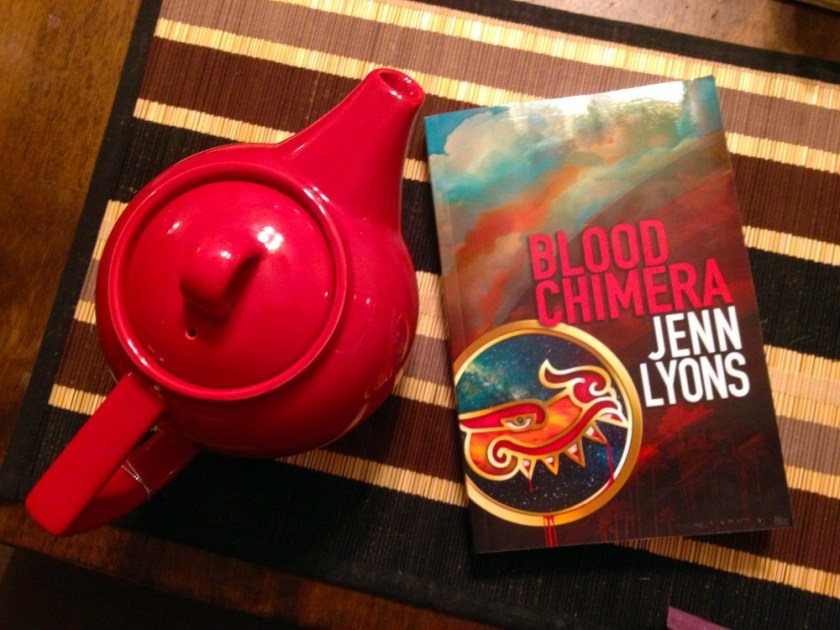
First, you may have noticed that I’ve taken down my countdown and link for my Smashwords link for Blood Chimera. Why? Because a publishing contract may be happening after all. No final word yet (and it’s not with the same publisher as before) but since I won’t have final confirmation until after DragonCon, it makes no sense to put the book live at that time. The new publisher is still an indie, but they fulfill the main requirements I have — namely they bring talents to the table that I can’t do myself, including some bang-up awesome marketing. So I’m crossing my fingers and hoping that works out. Because while I can do some of this myself (and expect I will) it would be nice to have a support network. Oh so nice.

After that, the next step will be to figure out if I’m going to self-publish Marduk’s Rebellion or keep trying to find a publisher.

Okay, so second, C. Jeffrey over at FOTS Fantasy nominated me for the One Lovely Blog Award. Yay!

So let’s go over the criteria.

1) Thank the person who nominated me.

C. Jeffrey! He’s working on an epic fantasy treatment (very Roman, very intense on the world-building) that I’m very much looking forward to seeing in print. Plus, he loves Steven Erickson as much as I do, so I’m sure he will bring some of that love of interesting world building to his work. Check him out if you haven’t already!

2) Put up the picture of for the One Lovely Blog Award.

one_lovely_blog_award

3) Tell everyone seven things about yourself.

  • I am both an illustrator and writer, although due to a fun thing called ‘facet syndrome’ (which sadly has nothing to do with gems), I can do very little art without suffering dearly for it later. I sometimes draw anyway, because.
  • Mosquitos find me delicious.
  • I am descended from three pilgrims on the Mayflower: obviously this is why I find Plymouth gin so tasty.
  • My first experience with LARP’ing was at a christian camp in the San Bernadino Mountains of Southern California, who had the children at the camp pretend to be East Germans trying to cross the Black Forest while camp counselors with ‘guns’ hunted them down and ‘killed’ any trespassers they found. It was a ridiculous amount of fun, which was undoubtedly not the lesson they had planned to teach.
  • I have been inside a bank while it was being robbed by armed gunmen.
  • As a child, I read every book in the science-fiction/fantasy section of my school’s library.
  • I am incredibly allergic to aspartame. Seriously, that shit will fuck me up.

4. Nominate seven other people and tell them in their blogs that you’ve nominated them.

Mike Lyons (Full Disclosure: My husband, but I still think his blog deserves it!)

Jeff Baker

Michael Shean

Bob Mayer

BottledWorder

Alex Krystina

Sarah Cradit

Okay, so that should about do the trick, don’t you think?

Villains and Rape

Okay, let’s talk about rape.

If you don’t want to, that’s fine, but I need to discuss some elements of this issue. It’s been bothering me.

I want to talk about rape as a storytelling and literary device, but I recognize it’s impossible to remove it from its real world context as something that has, odds are, actually happened to someone you know (the statistics are rather appalling in this regard.) Rape is very personal and very, very charged, and for this reason, more and more I’m seeing writers talk about rape as an edgy literary trope they can use to push boundaries and emphasize just how evil their villains are. Rape or the threat of rape is still a very common theme in movies, books and comics.

Note that I’m saying ‘writers’ and not ‘male writers’ because I’ve seen both men and women use rape this way (I’ve seen plenty of self-identified feminist writers use rape to emphasize how evil the menfolk are.) Take any random guy, have him rape the hero or their significant other, and you have instant villainy!

Yeah…so here I am to say: really think about that before you do it. Then think about it again. Then go ahead and give it a third pass, because the consequences of your decision may not have the effect you’re intending.

The duh comment: rape depowers the person being raped. That’s taken as granted and I’ve heard very few people try to argue otherwise, even if they’re arguing that it’s no worse than say, blowing someone’s head off. It’s an aggressive, hateful act of dominance, which is why so many otherwise self-identifying straight men rape other men (and why those men then don’t report it.) Rape is gender indifferent, despite the fact that the threat of rape is almost exclusively leveled as a silencer against women.

But here’s the thing: rape doesn’t just diminish the victim. In my opinion, the act of rape diminishes all parties.

What I’m saying is: I don’t think rapists make for really good lead villains. Let me explain why.

When I’m reading a story and a character within it demonstrates that he (it could be she, but this typically rarer, so I’ll use ‘he’) is a rapist, I immediately objectify that character. He stops being an interesting real human being with personality and depth. He only becomes a goal, a milestone, and obstacle for someone to kill, arrest or eliminate. He is reduced to something other than human, a phallic monster-beast that exists to be destroyed. He certainly loses any credibility as any kind of proper villain. He turns into an object of revulsion, something which is not worthy of hate anymore more than stepping in excrement is worthy of enmity: you wipe the junk off your shoe and move on.

(In the interest of full disclosure, let me say I’ve read two character depictions that managed to make me like the character even though he was a rapist: Alex from A Clockwork Orange and Karsa Orlong from the Malazan Books of the Fallen. So rules are made to be broken. Still, both of these characters are arguably anti-heroes, not villains, and the rapes were at the beginning of growth arcs that eventually saw some form of redemption — so that may be something to consider.)

I can vividly remember the very first time I ever read about someone being raped. I was eleven-years-old and, as was my custom at the time, I was sneaking into the Old Town Livery bookstore (which was only a few blocks from my apartment) after school to read books. There was a closer public library, but the Old Town Livery books were more interesting. I started reading Lord Foul’s Bane, by Stephen Donaldson (who was, in fact, friends with the store owner, and lived in the next town over.) It’s not too hard to figure out where I stopped reading. If I had owned the book, I’d have thrown it across the room. As it was, I felt physically sick.

Ah, you can argue, but that kind of emotional impact is what a good author strives for!

True, but I didn’t finish the book. Or any of his books, ever again. If his only goal was to engender such a feeling of disgust and loathing, he could have stopped writing the series right there. I was totally done with him by chapter 3.

So what brought this on, by the way, was the movie Elysium, which I saw a few weeks back, and the character of Kruger. Without getting into spoilers, a fairly major plot motivator for the movie is the fact that Kruger is nuts, a rapist, and is impulsive as fuck. In fact, some fairly large plot points hinge on this and the movie could not have existed in its theatrical form without it. When I expressed my displeasure with this fact, and called it sloppy writing, a friend pointed out that Kruger needed to engage in this behavior in order to motivate the hero to do what happens next.

And my friends, whenever someone tells you ‘but this has to happen, or the hero won’t do X’ just stop. That’s a warning sign. Pay attention.

That means there’s a danger that the action only exists as part of the hero’s story arc, to justify the advancement of the plot in the desired direction, and I would put forward that every character should have their own arc, their own reason for what they’re doing that should be consistent within their own motivations. The villain had to do X or he was going to miss his chance to steal the money is valid. The villain had to do X or the hero won’t have any motivation? Lazy. Were Kruger’s actions internally consistent? Yes, but only because his motivation was: impulsive rapist with anger management issues.

While I’m tempted to derail this discussion to those times when Anita Sarkeesian might have a really good point, I’ll instead say how disappointed I was to find the character of Kruger diminished in this way. By making him a rapist (would-be rapist) he lost his nobility, and the previews really did make it seem like he had the potential to be a truly awesome villain. I was looking forward to meeting this utterly kick-ass samurai of the wasteland, who served his distant masters before (hopefully) either dying in the fulfillment of a flawed duty or turning against those same masters, swayed by Max’s willingness to sacrifice everything for what was right. I was hoping to see a battle of wills between two men of strength and conviction, who found themselves on opposite sides of a no-win situation in a grey moral landscape where a lack of resources guarantees that nirvana could not be shared by all.

Instead I got…that.

My disappointment is a bitter pill. Lazy, very nearly unforgivable writing. I left the movie a little dissatisfied, but having trouble articulating why: the insidious nature of my complaint took time to come to fruition. And of course it got me thinking about why we use rape as a literary and storytelling device. What does it accomplish? Does it accomplish what we think? I have a hard time imagining a Roy Batty or Darth Vader possessing the same level of gravitas if they had been portrayed as rapists. And yet, if rape is the ultimate act of evil, as Mark Miller might suggest, shouldn’t an ultimately evil bad guy rape folks constantly? Khan Noonian Singh’s rapes his way through all the green-skinned Star Trek babes, right?

Having a villain rape someone to show they are evil strikes me as the equivalent to having them kill a puppy — sure, it’s effective in triggering our revulsion, but it’s a lazy way to write EVUL across someone’s forehead in large neon letters. It’s a cheap shot — a easy, sensational and cop-out way to demonstrate someone’s lack of morals. I want a villain I can have mixed feelings about. I want a villain who is a hero in his own mind. I want a villain who’s cold, calculating machinations make me slack-jawed with admiration even as I’m wondering how the hero will ever defeat him.

Most of the time, rape as a plot device is just lazy, heavy-handed, and dare I say, cliche.

Don’t be lazy: give me another reason to hate the villain, or better yet, give me a reason to be torn on just who it is I should be rooting for.

The Girl Who Stole High School

This worked out to be quite a bit more open-ended than I originally intended, so I suspect more stories are probably in store for later.

_________________________________

There was a girl at Charlie’s high school no one else could see.

The first time Charlie Du saw the girl, it was at lunch in the cafeteria. Jessica Simmons and Leica Hamilton were doing that thing again, the one where they and all their friends would gather at the table right next to Charlie’s and loudly ask supposedly innocent questions.

“Why do you think someone names a girl Charlie, anyway? Do you think her father must have wanted a boy? Do you think he beats her because she’s not a boy?”

“Do you think his father named her that because he killed lots of people during the Vietnam war?”

“Do you think her dad dresses her in boy’s clothes?”

“She’s so tall. Maybe she really is a boy, you know, but just, you know, like that movie with the girl who was really a boy, The Crying Game?”

And then someone would turn right to Charlie and ask: “Hey, is your favorite movie The Crying Game?”

Which was usually the point where Charlie, eyes wet with tears, would ball her fists and run from the room, leaving her lunch behind. On that day, when she did this, there was a clatter and commotion behind her, and Charlie turned to see that one of the girls, evidently not wanting the fun to end, had started to run after her.

Started to, because someone had put a leg out in front of her, and Jessica had tripped and fallen right on top of the next table over, into someone’s  tray of lasagna.

“Oh my god, Jessica, are you okay?” Leica and the others rushed over.

Watching, Charlie remembered thinking that if she had tripped like that, they would not have expressed anything like concern. She also felt a rush of sadistic pleasure. The whole cafeteria was laughing at Jessica.

Not a single girl said a word to the girl who had deliberately tripped Jessica. Not one. No one paid any attention to her at all.

“I wish I could be invisible,” Charlie said.

The girl looked up, and Charlie realized the invisible girl had heard her.

***

“Oh bless your– you did the dishes, Charlie? Thank you…” Charlie heard her mother’s voice from the kitchen, sounding simultaneously tired and relieved. She’d just come home from her job at the grocery store, and gone straight to the kitchen.

Charlie looked up from her history book. She hadn’t done the dishes. She had been putting it off the way she always put off her least favorite chore, hoping that her mom wouldn’t come home before Charlie was already asleep. Charlie frowned, closed her book and walked over to the kitchen, open to the living room through a low kitchenette where someone might, theoretically, serve drinks or meals but which usually just ended up as a place to set the junk mail.

Someone had done the dishes.

Her mother retrieved a can of diet coke from the dirty white refrigerator, popped the lid, and then kissed Charlie’s forehead as she passed. “Thanks, sweetie-pie. The customers today were so awful you’d have thought I was robbing them instead of checking out for them. I’m going to watch TV for a bit. Did you fix yourself dinner?”

“Yeah,” Charlie lied.

“Good, good,” her mom said as she headed into the living room and turned on CNN to see if they had any more coverage of the war.

***

When Charlie flipped on the light switch in her room, she nearly screamed.

The invisible girl was sitting on her bed. The girl looked up, smiled at Charlie, and put a finger to her lips to suggest quiet — like she was in a library or something — before she returned to reading Charlie’s old copy of Peter Pan. The bed around the girl was covered with little plates of food: pretty bright colored cookies in flower colors, small little turnovers decorated to look like crescent moons, cucumber sandwiches cut out in the shape of cats, pink and red berries, and tiny tomatoes in rainbow shades.

The room was clean. Charlie’s clothes were put away, her bed was made, her books returned to their shelves, her old ballet shoes hung up in a place of honor with a pink bow on the wall next to a feather-strung dreamcatcher.

Charlie entered the room and closed the door behind her.

“Peter Pan was a bit of a tosser, wasn’t he? The Disney movies always skip that part.” The girl’s accent was foreign, a beautiful lilt of hard and soft sounds.

She looked around Charlie’s age, and she was white, not just ethnically but in reality — her skin paler than almost anybody Charlie had ever known. Her hair was bright, vivid red, curls floating around her head like an out-of-control fire. She was dressed in hand-me-downs, stuff so tattered and beat-up that Charlie would have turned her nose up at them if she’d come across them at the Goodwill. The only thing about her clothing that didn’t scream homeless person was a silver bracelet of flowers around one wrist.

“Aren’t you going to eat anything? I brought food for you.”

Charlie stared.

The invisible girl stared back.

“How–how did you get in here?” Charlie finally asked.

“I used the door.”

“But–I would have seen–” Charlie bit her lip. Would she have seen her?

“Do they always treat you like that? At school?” The girl closed the book and set it aside.

Charlie shrugged as she sat down in her desk chair next to the bed, reached over and picked up one of the turnovers. She nibbled the edges. “I’m the new girl and they hate me. I don’t know why.”

“Jessica’s boyfriend Jason said he thought you were hot and Jessica heard him.” The girl paused. “He also said he’d hold you down and make you scream if he ever got you alone, so…I wouldn’t accept any rides from him if I were you. I don’t think he’s a very nice boy, even if everyone seems love how he can run with a football.”

Charlie’s mouth dropped open.

“You should try this.” The girl held up a tiny pale green cookie that looked like a mini-balloon version of an Oreo. “This is a mint macaron from my favorite bakery in Paris. It’s the best cookie in the whole world.”

Charlie opened closed her mouth and opened it again. “How did you get it?”

“I should think I went to Paris. Macarons here in the United States of America are different.” Her eyes were bright and happy. “You make yours with coconut and it’s really not the same thing at all.”

Macaroons not Macarons, Charlie thought, but she didn’t correct her. “When did you go to Paris?”

“Just now, of course.”

Charlie bit her lip. “What…what are you?”

“I’m a brownie,” she said, tilting her head and looking confused, as if she thought that should have been perfectly obvious.

“A brownie?” Charlie blinked. “Like…a house elf? Are you…are you magic? Like Harry Potter?” She paused as a thought occurred to her. “Did you do the dishes? And clean my room?”

The girl stared at her with large, liquid green eyes. “Yes, kind of, no, no, yes, yes.” She held out her hand again. “Have a cookie. Oh, and tea. There’s tea. Do you like tea? I think tea’s wonderful.” She nodded her chin to the side, where there was an ornate, delicate porcelain teapot and little fragile cups.

Charlie was pretty sure those hadn’t been there when she’d entered the room.

She ate the cookie.

“This is very good,” Charlie said. “Do you have a name?”

The girl hesitated.

“You must have a name,” Charlie insisted.

“I’m not really allowed to own anything. It’s part of the curse of being a brownie.”

Charlie frowned. “But your parents must have named you something. Does anyone call you anything? That’s not the same as owning something. You don’t own the names other people call you.” She put a hand to her chest. “I’m called Charlie.”

The girl smiled, wide and bright. “I’m called Megan.”

“So if you can’t own anything, Megan–” She looked around at all the food. “How did you pay for all this?”

The redhead blinked at Charlie. “Pay?”

“Uh–“

“I borrow things sometimes,” Megan admitted, then blushed as she looked at the food. “I guess in this case I won’t be returning it, so it’s more properly stealing.”

“Okay, so uh,” Charlie bit her lip, thinking. “I don’t mean to be rude, because thank you for doing the dishes and cleaning my room, but what are you doing here?”

“Well…you can see me.”

The room was very quiet. In the background, Charlie could hear the sound of gunfire from the TV, and she wondered if it was the nightly news covering the war or if her mother was watching a movie.

“Yeah?”

“I’ve never been to school. Okay, mean obviously I have been there. I have physically visited. I’ve never attended school.” Megan stood up from the bed, pirouetted, and hopped off, and Charlie blinked, because it was the most graceful thing she’d ever seen in all her years of ballet lessons. Megan moved so lightly the food didn’t even move on the plates. “I’ve decided I want to go.”

“You can do that now. No one would be able to stop you…”

“But I can’t ask the teachers questions. I can’t turn in homework. I can’t really participate. They can’t see me. But you can. You can turn in homework for me. You can ask questions for me. Through you, I can go to high school.”

“You want me to claim your work is mine?” Charlie shook her head. “That’s cheating.”

Megan looked so downcast Charlie felt like the most massive jerk ever. Puppies could learn a thing or two about soulful looks from this girl. “I mean, I…really? You’ve never been to school? Ever?”

Megan nodded.

“You can read,” Charlie pointed towards the book.

“Reading’s easy,” Megan said. She ticked off her fingers. “I can read English, Welsh, French, German, Hebrew, Greek, and Danaan.”

“Danaan?”

“Humans call it Linear A.”

The room suddenly seemed stuffy and hot and Charlie felt a sense of shuddering vertigo. Her voice squeaked. “Humans? You’re not human?”

“No, I’m…well…we’re called a lot of things. Kobolds, goblins, elves, pixies, Seelie, Tuatha de Danaan…” She picked up the discarded book. “None of us are the size of Tinker Bell.”

The room fell silent again, as Charlie stared. Finally she said, “Yeah.”

Megan tilted her head. “Yes?”

“Yeah,” Charlie repeated, smiling. “Let’s do this. Let’s steal you some high school.”

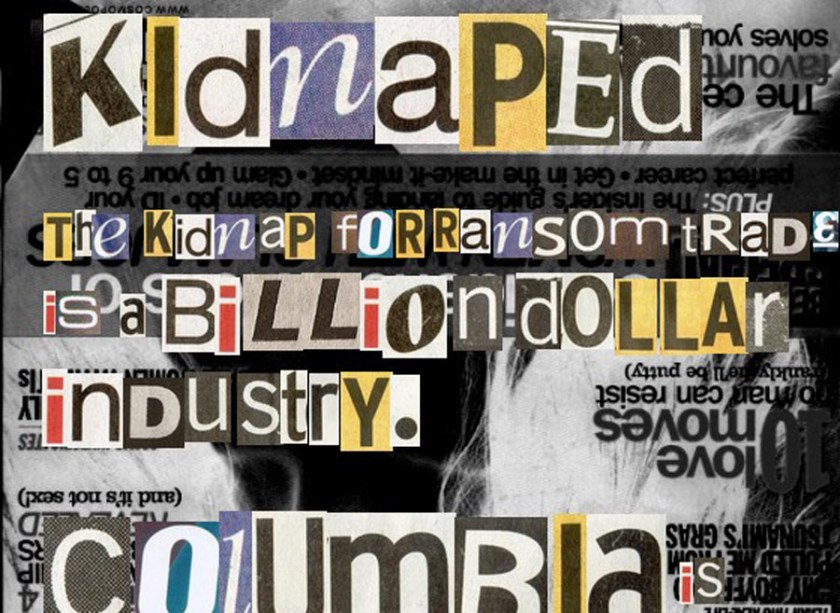
The Kidnap and Ransom Business

When I began researching Blood Chimera (I tend to do a lot of preparatory research on books when I know I don’t know a damn thing about certain subjects) I began to play with the idea that the main character, Jack, is a kidnap and ransom specialist.

What’s a kidnap & ransom specialist? Well, it’s been depicted in a few movies (probably most famously in Proof of Life) but a K&R negotiator is someone who comes in to organize a response to a kidnap for ransom situation. It’s a very small, select field, and incredibly secretive. There’s no single path to becoming a K&R specialist, but K&R people typically have backgrounds in law enforcement or military special forces (or both), and they can expect to fly all over the world and spend months at a time in the field. It’s dangerous, ugly work that puts their life at risk in foreign climes on a regular basis and requires them to be at home in the bureaucratic nightmare of dealing with governments, organized crime groups, terrorist cells and warlords. If they’re married, they have understanding families (or quickly end up single.) The field seems to be almost exclusively male. They are a strange combination of white knight, attorney and therapist, whose priority is not justice, punishment or judgement but simply getting the hostage back alive. If that means developing a rapport with the kidnappers, so be it. If that means killing the kidnappers, also so be it. They are both people-oriented and good with a gun.

Most K&R specialists work for insurance companies, who are often the ones paying out these ransoms and therefore want someone they trust making sure the money situation doesn’t get out of hand, but increasingly this is also a service offered by private military contractors who freelance out the skill set. These companies are service providers, consulting with Fortune 500 companies who have employees working in high-risk countries and giving briefings on the do’s and don’t’s of how not to be kidnapping and what to do if you are. Private industry reports (subscribed to for a fee like a magazine) on the kidnap trade are often more accurate and more honest than anything you’d find published by major governments, who often have diplomatic reasons for not wanting to admit that one of their trade partner has a major problem with keeping the tourists safe.

Needless to say, I found this all to be fascinating stuff.

At which point, I started delving further…and ran straight into a wall.

Most K&R experts, it turns out, don’t want you to know their name. They don’t want to be photographed. They don’t want to give interviews (although I did find a few out there.) They most especially do not want to talk about the process, how much money is an ‘acceptable’ price for a hostage, or how they convince kidnappers to lower the amount they’re willing to accept.

It’s for the same reason governments don’t want to talk about how they’re going to catch the terrorists or what vital clue the serial killer left at the crime scene: because the criminals are paying attention too. Every time CNN or Fox News covers a major kidnapping case wherein a $5 million ransom was paid, the K&R industries collectively groans, knowing kidnappers in that region of the world just mentally readjusted their asking price. Shining a light on the kidnap for ransom business seldom works to the advantage of the hostage. Often, particularly in the case of politically motivated kidnappings, it’s the whole point, the real ransom — and after the kidnappers have aired their grievances, listed their demands and shined a spotlight on their cause, they may feel they have more to gain by killing their hostages than releasing them.

The deeper I dug, the more I began to wonder who I would be serving by portraying a extremely ‘accurate’ depiction of what the kidnap & ransom business is really like.

So I stopped researching.

I know it seems like a strange decision (and I tend to over-research, so I honestly probably already did quite enough for a subject which is not intended to be the primary focus of this series) but I decided that ultimately a little Hollywood gloss probably wouldn’t hurt my story. The real ‘business’ of kidnapping is slow, tedious and awful, filled with long stretches of nail-on-chalkboard waiting. Kidnap for Ransom is a crime of grey morality and murky politics that lurks at the intersection of extortion and terrorism. It’s incredibly ugly and in some parts of the world, its run with a chilling efficiency that leaves even hardened experts with little other option than to pay the ransom and hope for the best.

So this is my not-apology, my explanation for why I won’t always get these details right: I don’t want to. The jobs these people do is hard and thankless enough without me providing any kind of primer on how the kidnappers can make their crimes pay.