Latest Posts

Copyright 2013, Jennifer Williamson

The Art of No

So remember that publishing deal I was gushing about just last week? The one I wanted so desperately?

I’m walking away from it.

What? Insanity!

I know, I know. I can hardly believe I’m doing it myself. The company seems like a good one. I adore the person who was my contact. (For legal reasons, I’ll be naming no names.) I was so exited. I was going to be published! I celebrated when the contract arrived in my mail box.

Tonight I turned it down.

There are a lot of reasons why. Some I won’t go into. I will however address the reasons that were independent of the publishing company themselves (or which would be true of any small indie press, which this was). On investigating the contract and doing some hard analysis of risk/reward and ROI, I came to some conclusions regarding my own personal situation.

  1. I’m a graphic artist. Technically, I used to be a graphic artist, but I did it professionally for twenty-years. A print graphic artist. I know layouts, typography, pagination, and trim like woah. I’m utterly confident of my ability to layout both print and e-book versions myself and get it right.
  2. I’m also an illustrator. I have also done this professionally.
  3. I am an editor. Okay, no, but I’m married to one, and I’m friends with a few others besides. The point is, I have options for this. FREE options.

Most authors out there just simply don’t have these advantages but the reality is that I do (for which I’m very grateful, and never before have I been so appreciative of the life journey that’s brought me to where I am,) and that means that, were I to handle all these elements of book publication myself, my overhead would be almost entirely sweat equity save for the few costs I can’t circumvent (ISBN and copyright.) This means that for a publishing company to provide a better, more irresistible deal than the one I can give myself, they would need to provide me with:

  1. At least as good a job on the above items as I could do for myself. (Hey, there are plenty of artists and graphic artists better than me. I’m focusing on writing for a reason.)
  2. Marketing. (And not just on their own web space or instructions for me to do the marketing on my own behalf.)
  3. A presence in stores. Something other than print-on-demand (which I can also do myself.)

Unfortunately, my investigations led me to believe that my would-be publisher wasn’t going to be able to meet these criteria. From a practical point of view that meant that even discounting contract concerns and disagreements over terms, it wasn’t in my best interest to move forward with this, because what they were offering me wasn’t worth the percentage I would have to give up to purchase their assistance.

That is an important point to keep in mind, btw. You always pay for the services a publisher provides. No publishing company is just giving these things away for free. If they tell you this is free? Of course it’s not free. That would be a very poor business model. Traditional publishing simply folds those costs into their own overhead, but it’s your book that brings in the revenue that pays for it. For most of us it’s just far less painful to suffer these costs invisibly (we don’t miss money we never saw, after all) than to have to pay out of pocket in advance. And for most authors, it’s a fair trade. Why waste all this time trying to master skills you’re not good at when you could be writing? This is what these people do! They’re good at it! Respect the skills. I certainly do.

Don’t get me wrong: I’ll be paying too, of course. With TIME. How much time? Probably all of it. (Ask me again if it’s worth keeping control in six months: I may have a very different opinion.)

The result of all this is that I had an option I would not have had just a few years ago: the ability to walk way.

It may not be the best decision for everyone, but in this time and place, I’m quite confident it was the best decision for me.

You’re Not Good Enough

shooting-stars

‘What if I’m not good enough?’

That’s my goblin.

It’s not just my goblin. It’s my husband’s goblin and my friends’ goblins and it haunts the dreams of so many people I know, online and in the real world, who dip their toes in creative works or dive in with both feet and a held breath. That goblin waits for the dark hours of the night and ambushes us from paragraphs of mangled reviews or worse, from the silence of a lone voice echoing lost in the static of the internet.

So let me be perfectly clear: you’re not good enough.

Don’t be mad. I’m not good enough either. No one is good enough.

We are, all of us, flawed and imperfect and self-destructive, and while we are constantly striving towards perfection, it a goal that none of us will ever reach. Take a deep breath and accept that you are not good enough. Be liberated by that, so that you give yourself permission to make mistakes. (Sometimes the accidents are so damn beautiful.) Pick yourself up, look at what you did.

Push yourself harder. The question was never ‘are you good enough’ anyway (because you know the answer, don’t you?)

No, the real question is: what are you going to do about it?

Let me tell you what you’re going to do: you’re going to STRIVE.

Strive for beauty and strive for truth and strive with the yearning of a maker born to touch the divine if just for a single glittering second. You’re going to surround yourself with the people who love you and will tell you your work is beautiful but more importantly you will seek out those souls who will tell you with brutal honesty that what you’ve just sweated out could be better, could be improved upon, who will set you on the road and slap your ass to get you moving.

Never stop moving. Don’t settle. Settling is its own reward, and it’s a dull and heavy prize.

No, you’ll never be good enough, but that doesn’t mean you won’t be fucking great.

On Book Covers

Klementinum Library, Prague, Czech Republic

Klementinum Library, Prague, Czech Republic

I used to be a graphic designer. This isn’t exactly a secret, and I was a graphic designer for something like 20 years (a little over, but close enough.) I became something of a specialist in logos, which are often considered the hardest work a graphic designer can do.

Nope.

I wasn’t giving enough credit to book cover designers. This stuff is HARD. Keep in mind: I am an artist. I have that advantage over most writers — I still think this stuff is hard. Insanely hard. When I say writing the book was the easy part, that is nothing but blunt honesty.

You’re probably wondering why I’m designing the book cover at all, if I have a publishing contract. The truth is: I don’t have to. I’m very lucky in that my publisher is open to the idea of letting me take a crack at it (even if they go with something else, which would be their contractual right.) As a graphic artist turned writer, I have it within me to be the most obnoxious of beasts, a writer who thinks they know something about design. Quelle horreur. The good news is that instead of flailing wildly, pointing at the proof and saying “I don’t know what’s wrong with it, but I know I don’t like it,” I have the option to show, not tell. Everyone wins (hopefully.)

As such I’ve been spending a lot of time looking at covers and thinking about the philosophy behind what makes for a successful book cover.

There are a lot of opinions about book covers, and they are often completely contradictory. Show the main character (you shouldn’t show the main character.) Illustrate a scene from the book (never illustrate a scene from the book.) Use photography (never use photography.) Use large type (don’t use large type.) The only rule that seems to be consistent: there are no consistent rules for book covers.

One of the pieces of advice I’ve heard the most often is that you should make sure your novel’s genre is identifiable at first glance. Romance novels have a certain look, as do westerns, mysteries, fantasies, etc. And that sounds like good advice, right? Dare I say, it IS good advice. The last thing anyone wants is for you to pick up a book accidentally thinking it was something completely different, then leave a nasty review because the book wasn’t what you expected. I know I’d be upset. It’s bait-and-switch and no one likes that kind of surprise.

Then I began to notice a pattern. A lot of break-out books didn’t really follow this rule, you see. Would you have ever in a million years thought Twilight was a book about vampires? Or that 50 Shades of Grey was a book about BDSM? How would you classify The Fault in Our Stars? The Hunger Games? American Gods? Clearly one can break the rules. Indeed, one might even say that breaking the rules carries a risk, but the potential reward is pulling away from the field. To put this in a John Hughes metaphor: you can try to blend in with the popular kids in the class, or you can show up in weird clothes and tri-colored hair. The later might get you sent to the principal’s office, or it might convince that cute guy to finally notice you (someone will notice you anyway, and remember you too, which might be better.)

Anyway, you might guess I was never very good at blending in with the popular kids.

Now if my publisher likes my book design, we move forward with it and my book sits there like a big fat dud, I will probably rethink my philosophy. For now? Let’s talk about the good, the bad and the ugly of book design.

The Good

There’s a lot of amazing work out there, and even amongst indie and self-published books, I’m seeing a huge rise in quality in just a few short years. It feels a bit like the start of web design (yes, I’m old enough to remember ‘the start of web design’) where the early work was pretty bad just because most of us were still trying to figure out what could be done with html. Improvement was fast, and quickly went from being all do-it-yourself to a field with a lot of specialist freelancers who could do it for you. As self-publishing grows, we’re seeing a growth in industries that provide necessary secondary services — like book design. It’s a lot easier to hire someone to make you a damn good cover than I suspect it was even a few years ago. That’s awesome.

For those who want to design their own cover, the internet abounds with seriously good advice and tutorials. Some of these sites will try to sell you something (there’s still no such thing as a free lunch, is there?) but that doesn’t mean the advice on typography and formatting isn’t sound. Sites like www.fontsquirrel.com mean that you have no good excuse for not using an outstanding font on your cover design.

The Bad

The market has changed. There are now web sites devoted to people who don’t get the book cover thing right. (Protip: if your cover looks like any of these, give serious consideration to revising it. Completely.) Even professional publishers are still learning the curve and regularly design covers that look like terrible smears at thumbnail size. Small indie presses may not have the budget to hire the kind of professional illustrators they need to really take their work to the next level, while readers are becoming increasingly sophisticated and intolerant of amateur-looking covers, equating an amateur cover effort with equally amateur writing inside (literally judging a book by its cover.) There’s no wiggle room for a cover that looks like it was created in MS Paint.

The Ugly

Especially for new writers, it may be prohibitively expensive to buy original art for a book cover. Believe me, I know. Were I self-publishing, I certainly couldn’t afford that right now. The state of the freelance art world is atrocious, and you might well be able to find someone over at DeviantArt willing to sell you a photo or even license you the use of their awesome illustration for prices that amount to what you’d pay for a meal in a reasonably good restaurant (awesome if it works out) but you’re counting on the fact that someone out there has already created the perfect image for your book. It’s a roll of the dice. Likewise, stock photography has become reasonably inexpensive, but because most cheap stock photography and art is royalty free, that means there’s no guarantee at all that the art on your cover won’t also end up being the art on someone else’s cover. You can’t stop this, control this, or call out ‘dibs.’ It’s a bit like showing up to the ball in the same gown, isn’t it?

Ultimately, my advice is: pay for the stock art or photo. It’s going to be better quality than anything you’ll shoot yourself, and if your book takes off, use some of the proceeds to splurge for awesome original work.

What not to do.

  • Don’t montage elements in photoshop. Creating a good montage is a skill. You (likely) don’t have it.
  • Don’t distort the proportions of photos. This never looks good.
  • Don’t apply layer effects to fonts (full disclosure: I do this very thing on my book cover, but in my defense? I do it like a boss.)  Generally speaking, don’t play with warping, distorting, stretching, beveling, drop shadows, glows, or any other cool layer effect unless you do this professionally. Even then, really think about whether it makes the cover stronger. If it’s not carrying a lot of weight, leave it. I have a least one friend (also a graphic designer) who has some very strong opinions about the fact that I’m using layer effects at all on my cover: namely, she thinks I’m INSANE (she might be right, too.)
  • Oh, and by the same point: no filters. It’s unlikely that inverting the color profile on a bad photograph is suddenly going to turn it into a good one, or that applying crinkle edges is going to fool anyone into thinking that photograph is an illustration.
  • Don’t be clever. Don’t try to photoshop a gun into someone’s hand that wasn’t originally carrying one. Don’t try to mesh different photographs into ‘one’ original. We can tell. (protip: the lighting will never match.)
  • Don’t illustrate the cover yourself unless you are, in fact, an illustrator. I don’t care how many people told you that your drawings are awesome, it’s unlikely they are awesome enough for professional standards.
  • Don’t put the illustrator’s name on the cover. Sorry, but that’s just weird. I’ll all about calling out props inside, but you don’t need to give them a credit on the cover.
  • That also goes for the great art you made in Poser or with Maya/Max, etc. Put the 3D away.
  • Don’t do ANYTHING that obscures, hides or draws attention from two elements: your name and the name of your book. I can’t tell you how many books I’ve seen in the past three months where the author’s name was illegible or written in such small type it was effectively invisible. A book cover is no place for humility! The whole point is that you want the reader to remember your name. You made this! Be proud.
  • Don’t create a book without contrast. I’ve seen plenty of books that were well done monochromatics (using one color) and some lovely book covers done in black and white, but all of them had contrast. Contrast creates interest. Take your book cover and (assuming it’s not already) turn it black and white. Can you still understand what’s going on? Is the text still readable? Or did your book just become a rectangular blob. If the later, this needs to be fixed, pronto.

What to do:

  • Pick a color scheme. Stick to it. (Here’s a lovely tutorial on color theory. It’s for web designers, but I promise everything they talk about here works for book covers too.) You could do a lot worse than to sit down and think about color before you think about any other element of your book cover.
  • Use readable fonts. I can’t stress this enough. It doesn’t matter how wonderful or appropriate the font is if it’s so ornate no one can read it. Awwwards has a very nice collection of links to free fonts that go behind what you’ll find at the usual sites. Not all of them will work for books (in fact, some should be run from, screaming) so use your discretion, but there are some great fonts available. Remember that simpler is better (I like the 2012 group better than 2013, for what that’s worth).
  • Keep it simple. Seriously, say what you want about the book, but the decision to use a simple motif of a pair of girl’s arms holding an apple for the cover of Twilight was just good design. You do not have to include a dozen, five, or even two elements on your cover. Use the minimum you can.
  • Show it to people. Show it to everyone. Show it to people who will be brutally honest with you. Show to people that will rip it apart. This isn’t just so you’ll feel bad about yourself: you need fresh eyes who will spot the mistakes you may have made. It doesn’t mean you have to listen to them either — but it does mean you’ve defended your decisions and you are at least aware of the possibility that your book cover isn’t up to par.
  • Don’t be afraid to pony up the dough to a professional. At the end of the day, cover art is probably the one thing you DO want to spend money on (right after a good editor.) And it frees you up to concentrate on writing.

Okay, so that’s it (I make it sound so…easy…don’t I?) After having gone through the process myself (a process that isn’t by any means finished) I have a new appreciation for the skills involved. This really isn’t something that just anyone can do and expect to do well, so much like writing itself, if you’re going to do your book cover yourself, prepare to invest a lot of research and energy into the task.

©2013 Richard Lund

Beginning My Next Novel

Okay, so here I am…I have two finished books shopping for a home, one of which is well on its way to publication. So I should finish the epic fantasy, right?

Hell no.

I’m writing the sequel to Blood Chimera, my debut novel. Because when folks finish reading that, I want them to have a book they can jump right to, or at the very least, know that it will soon follow.

Oh, which reminds me: Avast! Here there be spoilers!

Go away if you don’t want to accidentally find out details of Blood Chimera.

You still here? Okay, let’s get this shit started (as Ze Frank would say.)

So the first thing I do, the very first thing, is pick out music. Yeah, yeah, I know, but I like to have soundtracks when I’m planning a book. And this is a pretty music heavy book. There will be nightclubs, concerts and stuff as we spend some more time in Hollywood and along Sunset Strip. So let’s see…I start with some David Bowie, and then add Marilyn Manson and Lady Gaga — because the villain of this book is basically an amalgam of those three anyway. Add some Doors for nostalgia. Jack’s mother Vivian is going to have a larger role in this book, so let’s throw a dash of Killer Queen and Fluorescent Adolescent (her theme songs.) I fill in the gaps with anything that stirs my fancy. It ends up being about 50 songs total. I’m not worried about order at this point, this is just mood music:

I’ll edit and muck about this as I go, add or remove songs etc. (I can already tell I’ve been dangerously remiss in leaving out the blues and jazz,) but this is just background noise. Once that’s done I hit play, lean back and do some serious thinking.

So I typically like to start with characters, and here I find that a significant amount of the groundwork has already been done — I’m inheriting a lot of people from the first book, including the main villain. Although he doesn’t appear in the first book, that wasn’t always true — in the first draft Zander Sin did show up, so I put as much effort into developing him as anyone else during initial world-building. I know there’s a few characters missing: I’ve already decided the baddie is going to be blackmailing our hero to do something naughty that will probably involve someone not yet introduced, but I haven’t as yet figured out the details. Kidnap? Murder? Robbery? So many possibilities. Also, In the first book, the villain of the piece drove most of the action, but in the second book I’m going to reverse that. The good guys are already focused on the villain of the piece, pointed towards him by book one. Now they’re actively going after him, Leverage-style.

Of course, that’s easier said than done. He’s a slippery bastard.

For this second book, I’ve decided I’m going to try Ann Greenwood Brown’s Frame Method, because I like the idea of getting the story down, as Amy Good would say, during the honeymoon period. This may be a disaster! I haven’t tried it before, so it will be utterly new to me. However, I’m going to predict that it will probably be better than my previous method of getting 3/4 of the way through the book, running smack headlong in the The Wall, and wildly flailing through a total re-write.

Yeah. Let’s never do that again, okay? Okay.

Then I move on to scenes. These are the ‘nice to haves.’ I don’t have a plot yet! I just have locations and situations that I would really like to fit in to the book if I can. (These are also, by the way, almost invariably my darlings, and there’s a good chance that at least some of these are here because I think they’re ‘neat’ and not because they do a damn thing to support the story.) This is a wish list. All of this might make it in, or none of it may.

And…I’m not posting that list here.

It’s one thing to spoiler a book that you could actually buy, but Blood Chimera likely won’t be available for months yet. I’m only that mean to my heroes! Suffice it to say, it’s a list of places I’d like to visit in the story, character arcs I’d like to see explored, and stuff I think is just plain cool.

Now to sew it all together…

Very Good Things

happyKitten

So I woke yesterday morning to find an offer from a publisher sitting in my mailbox. Now, I can’t give out details yet, but this is going to happen: I’m going to be a published author. (Okay, I’m probably going to be a published author — it’s still possible that I won’t like the contract, they’ll come to their senses, something will happen to muck it all up.)  I’m not going to be in ‘I’m writing a book’ limbo — everybody’s writing a book. I will have written a book. It will be in stores.

My reality just shifted.

So I’m taking a moment to reflect on this, because I’m kind of fascinated by the fact that this is the year that everything came together. I’ve been writing for a long time. Years and years. Why now? Why is this the year I’ve finished 2 books, and will almost certainly have a third finished by its end?

Part of it I can blame on finally jumping on the twitter bandwagon (which really is a fantastic, inspirational place for writers to be), but not all of it by any means. I think I’ve finally got it.

This is the year I wanted that book finished more than I wanted anything else.

I stopped playing RPGs, stopping mushing (yes, I mush, don’t judge), stopped playing video games every night and stopped cluttering my free time with TV. I cleared my schedule of all things not ‘writing the book’ with a few breaks for ‘reading books.’ I learned that I can write far faster than I was allowing myself and I learned that you can edit something good out of a shit first draft but you can’t make something good out of a blank computer screen. I learned that J.K. Rowlings is right about coffee shops being awesome places to write, that an iPad and a bluetooth keyboard were worth every penny spent, and that beta readers who give good feedback are worth their weight in gold (to be fair, I already knew the last one .)

So it turns out the secret to writing is…writing.

Barking at the heels of all this triumph and joy is a pack of devastating insecurities, because shit is about to get real, yo. You can tell yourself that you’re an awesome writer as long as it’s just you and a small circle to friends who sincerely believe you’re the next Hemingway (or at least don’t want to hurt your feelings.) That all changes when it’s a real book, really out there, and really being reviewed, praised and stomped on by people don’t know you and don’t care one bit about your feelings. Publishing a book is brushing out your hair, getting up on that horse and going for a naked ride through town. I look at a lot of authors. Some are amazing and some are not (at least not by my definition) but how could I ever tell them that when I am so aware of how much spilled blood is left on the keyboard by the time ‘the end’ is printed on that last page?

Writing is the easiest thing I’ve done, the hardest thing I’ve ever done and the most worthy thing I’ve ever done.

Okay, now on to stressing over book covers.

Writing Fast, and Why Twitter is Awesome

beautiful_universe-wide

So it’s been a while.

And I’d apologize for that, except I finished not one, but TWO books in that time. So no apologies. I was getting stuff done. Better, both books are inching perceptibly towards being published. No details yet, because no contracts have been signed and nothing it as yet written in stone, but I’m starting to feel more and more confident that yes, this is really going to happen.

Which still feels a little unreal.

So what wisdom have I learned in the past few months?

First, I’ve learned that I can write far, far faster than I ever realized. If I’m really pushing myself, it’s not at all unrealistic to write 1,000 words in 30 minutes, which translates into 4,000 words a day if I write for two hours in the evening.  And it’s not easy. It feels a little like you’ve run a race, honestly, but it means I can come home from work, cook dinner, and write 4,000 words. It means, if I keep up the momentum (which I’ve learned I can do) that I can finish a 100,000 word book in a month. There are caveats of course: I have to know exactly what I’m going to write, have it plotted meticulously so I understand where it will start and where it will end. I also cannot go back and change my mind, cannot stop to edit, cannot pause while I research something on the internet. Write!

It’s curiously liberating. I’ve learned, for example, that writing very fast doesn’t give me time to second guess myself. Yes, I wind up with a lot of spelling mistakes and poor grammar, but plot and pacing seem stronger, and the first two are easy enough to fix on rewrite. I make some lovely discoveries when I’m writing as fast as I possibly can. And besides, if I give myself a month to research, a month for the first draft, and another month (oh hell, let’s be generous and say two months) for revisions then I can theoretically finish a book in four months (while holding down a full time job.) I haven’t done that with a novel yet, but it feels appealingly possible. Three books in a year starts to seem reasonable.

Second, I learned that twitter rocks. Seriously, blogs are great and all, but if you’re a writer and not on twitter, fix that. Why? Because all the other writers are on twitter, not to mention the literary agents and publishers. The writing world lives on twitter. You find out about submission contests on twitter. Both my books ended up receiving valuable attention because of twitter. In fact, if they both end up published (I’m crossing my fingers) it will 100% be because of twitter made it easy for me to figure out to whom I should be submitting. More so, thanks to twitter, these weren’t unsolicited submissions, which is the holy grail for unpublished writers trying to find someone who will actually read their work and not just move it to the slush pile.

Now, personally I think there’s a high learning curve on twitter. I was not originally a fan nor did I take to twitter immediately. Learning to like twitter has taken real effort. That said though, twitter has made such a huge difference in my whole process that I have to now call it ‘invaluable.’ Oh hey, that writing fast stuff? That was twitter too. There’s a twitter writer’s group called #writeclub who run writing sprints every Friday night. Participating in those taught me that the only person holding me back from finishing my books had been myself.

Real moment of epiphany there.

Weaver @2013, Jenn Lyons

Marduk’s Rebellion Concept Art: Mallory McLain

Meet Lieutenant Mallory McLain, code-named “Weaver,” an Intelligence Operations agent working for the Solar Independence League, the fancy-schmancy title for what most folks just call ‘The Rebellion.’ She’s one of the best of the best, a solo operative who specializes in break-ins: computer, prison or research lab.

Only now that the aliens the human race has been fighting for almost a century are suing for a treaty and withdrawing from their occupation of Earth, there will finally be peace and she’s going to be out of a job. Right?

Works in theory.

Updated: The great thing about posting this is that after staring at her for a few days, I’ve decided to return her to being a blonde. The character is happier that way, if that makes any sense.

Why Momma Needs Her Stories

gossip girl
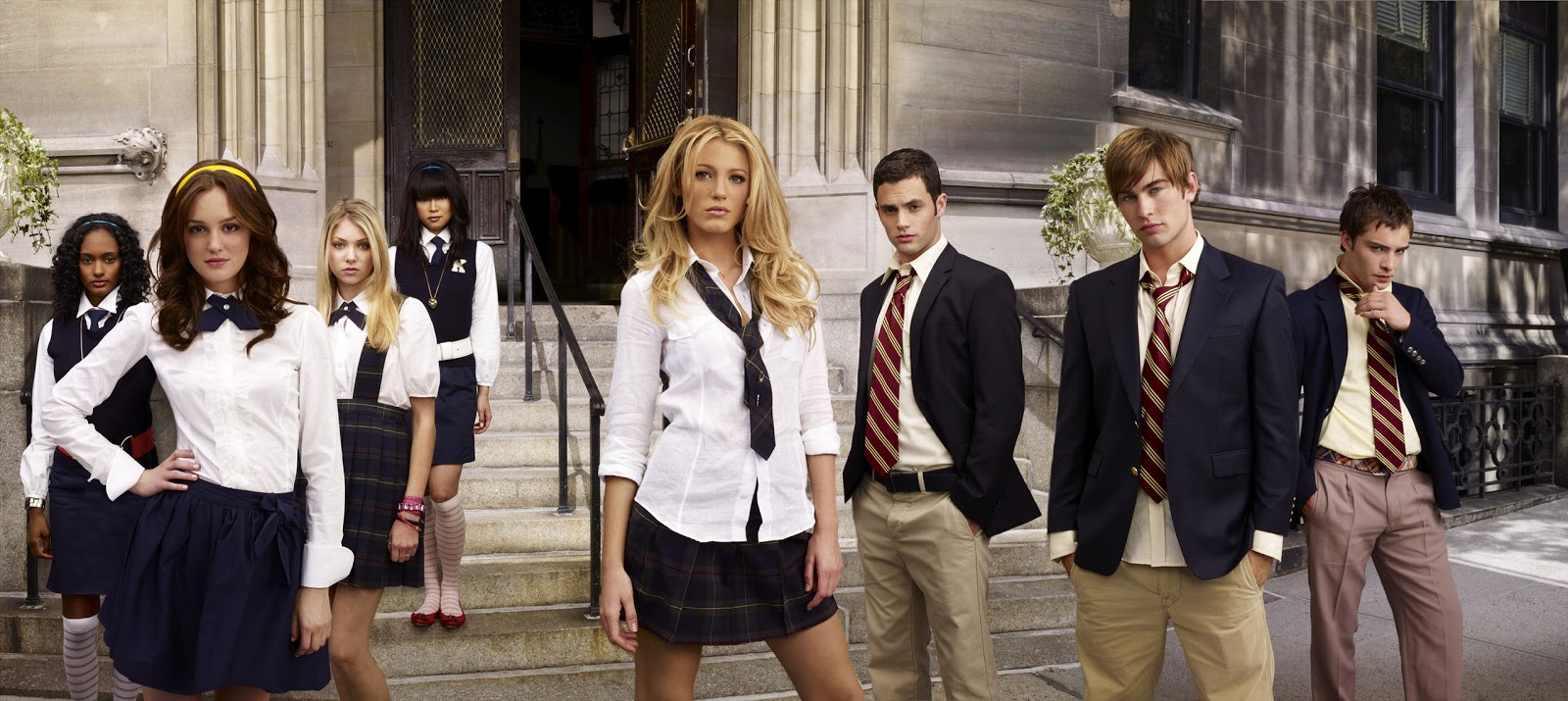
I wanted to say I never watch soap operas, but then Blaire Waldorf called me a dirty, dirty liar.

Anyone who doubts that the worlds we create in fiction can have a profound effect on the reality around us should go read this article on world-wide fertility rates. If you’re anything like me, you grew up being told several unassailable facts: one, that the world-wide population was booming to unsustainable levels and two, this was because  third world countries were having too many kids. I remember hearing incredible numbers: the population of the planet would be at 10 billion by 2010, which would of course lead to everyone starving and killing each other over that last piece of broccoli  Except this hasn’t quite panned out. The chaotic system turns out to be just a little self-adjusting, and it’s not necessarily for the reasons you’d think — certainly for no reason Darwin would have suggested.

Population growth has slowed radically in the last twenty years. Virtually every part of the world but Africa is now operating at near ‘replacement’ levels of population growth — i.e. populations that are either self-sustaining or shrinking. Africa is still seeing a population boom, but one can argue that all the pressures that would push large birth numbers (large  infant mortality rate, violent conflict, ever-present disease and lack of education) are still very much in play. We are now estimated to hit 9 billion by 2050 — still a very large number with a huge global impact, but I can’t help but notice the slider has been moved out a few decades. Most of that isn’t even because we’re having more children, it’s because throughout most of the world, more of those children are living to become adults and have children of their own, while the elderly are taking longer to exit the stage.

What changed? It wasn’t birth control programs, although I’m all in favor of better access to birth control. Most scholars seem to agree that women’s education played a strong part, but that’s not a catch-all answer either: population growth has shrunk even in parts of the world with low literacy rates among women. The article above suggests a brilliant, subversive, totally unexpected explanation:

Television.

No, the electromagnetic energy from a TV screen isn’t making us sterile. But fertility rates have shown steady decreases in countries with a strong television presence, and in particular, a strong soap opera presence. Soap operas? Yes, soap operas. In Brazil, for example, scientists have noted a solid causal relationship between the drop of fertility from 6.25 to 1.81 and the access to television-based novelas in Brazil. The study suggests that since soap operas typically portray smaller family sizes (any writer knows a story is spoiled by too many characters who can’t cheat on each other, Game of Thrones not withstanding) women in these areas are more likely to emulate the women they see on the telenovelas and stop having children after they’ve delivered two or three.

Mind boggling, isn’t it?

(Africa, by the way, doesn’t have a lot of soap operas on their channels. They have so far been more interested in sports. So it’s also interesting that they also have the highest fertility rates on the planet.)

I’ve never been a huge fan of the traditional telenovela or soap opera. (Okay…there might be a few exceptions. Thank you for the reminder, Gossip Girl.) This is changing my mind — at least about accepting their presence, if not exactly convincing me to watch them. If one of the key ingredients to dealing with our very problematic overpopulation worries is as simple as letting women watch their stories? Deal.

But just take a moment, step back, and revel in the power of imagination. We (and by ‘we’ I mean a bunch of disconnected television executives, screen writers and actors who had no idea their behavior would elicit this result and were only interested creating a sell-able product with mass appeal) have changed something significant in the behavior of very nearly the entire human race, and we did it by repeating a message we didn’t even know we were communicating: small families are good.

We hacked ourselves. We self-corrected as a species.

Maybe it won’t be enough, but we did it. Isn’t that astonishing?

The Best School

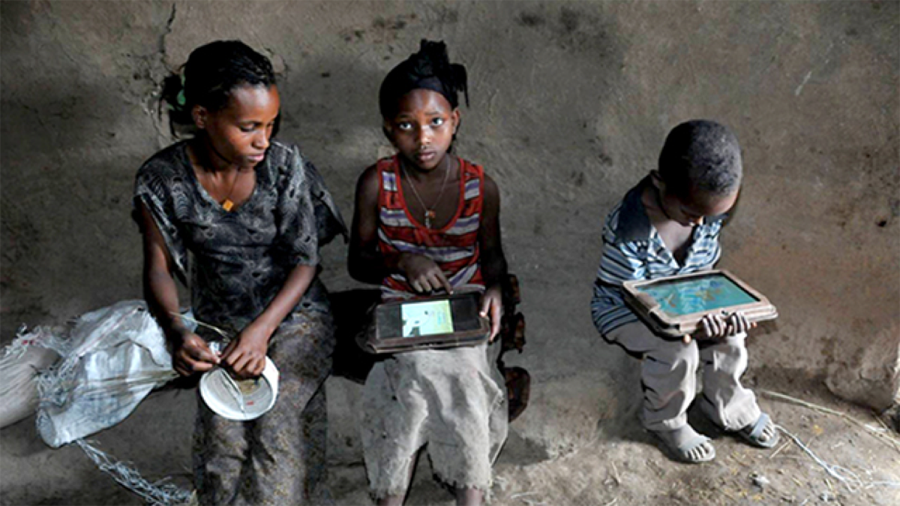
Ethiopian Kid Hackers

Last year this article started making the rounds on facebook and social media. Various other sources have picked it up because…well go on, read it. It’s amazing, isn’t it? The core idea is like Lord of the Flies with knowledge instead of blood as the punchline. They took one thousand tablet PCs, still in boxes, dropped them off at two villages, and left. No instructions. No lesson plans.

Then…they let kids do what kids do best: get into shit they’re not supposed to be messing with.

Six months later, those kids had not only figured out how to use the computer to teach themselves, their parents, and everyone around them to read and write but had taught themselves hacking in order to turn back on some of the tablet features (like the camera and internet access) that had been turned off originally. Would those kids have done all that if they’d been forced to? Marched into a school, sat down and given a strict lesson plan with at least three hours of homework?

Maybe…I’m open to the idea that children in a place like Ethiopia are probably more receptive to the opportunities of learning than children in America. I suspect it might be less taken for granted. On the other hand, no child ever has liked to be forced to do anything, from chores to eating their normally favorite food, and that includes learning. Because no one told these kids that they had to study, or how many hours they had to study, or even that what they were doing was called studying, instead they just had fun. I’m going to speculate they probably ended up studying far more than they would have it had been forced upon them, in much the same way that as I child I was reading a book a day but couldn’t be bothered to read my social science homework.

These kids are learning to love learning — and that is the skill we desperately need more of in the world.