Latest Posts

Baby’s First Youtube Video

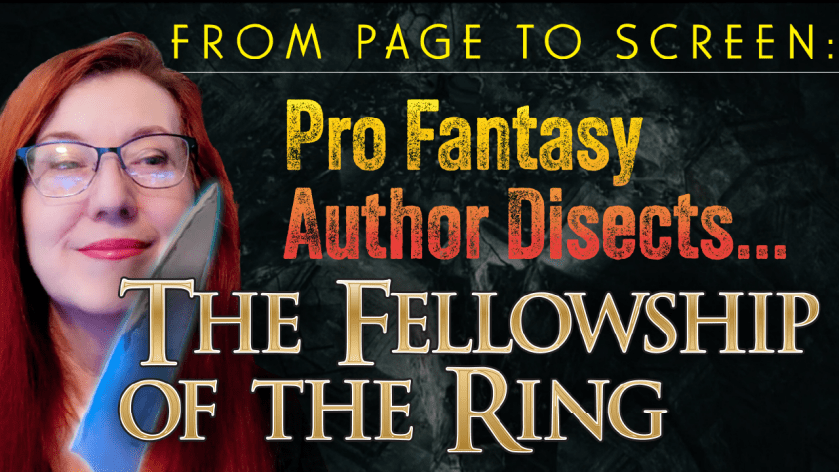
Okay, I suppose I shouldn’t be calling myself ‘baby’ at my age, but this IS my very first youtube video. Lookie!

So why am I doing this? Well, for one because I have all those opinions and because two, and more importantly, because I need to draw attention to my Patreon.

Yes, I am starting a Patreon. I put it off for as long as humanly possibly, mostly out of a misplaced sense of pride. You know, that I shouldn’t *need* to have a Patreon.

But I do need one. Publishing pays well only for a very few, and while I am far luckier than many, that doesn’t mean I’m pulling in enough to pay the bills. Publishing is also slow, which means that even once you have a book deal, it may take half a year or more before you see a dime. So here I am, the woman who has never considered herself especially good at social media, diving into the deep end out of pure necessity.

We won’t even talk about how difficult this first video was to make. I have a newfound respect for the video artists who did this full time and make it seem effortless. Just…all the respect. It was a process of trial and error and I’m far from done with the learning curve.

As for the video itself, well, I figured I’d start off with something I have a lot of opinions about: The Lord of the Rings. It was a formative series for me, and one that I still love despite its flaws (and yes, it has flaws). So I thought I’d share that, and hopefully other people will enjoy conversation, even if (when) they don’t agree with it.

The Two Towers video will be out soon, followed by Return of the King, and then I shall (hopefully) be moving on to other book/movie adaptations. Or other video topics entirely. (I’m open to suggestions.)

And don’t worry, I haven’t stopped writing. In fact, I hope to have some good news in a bit on that very topic.

Stay safe y’all,

Jenn

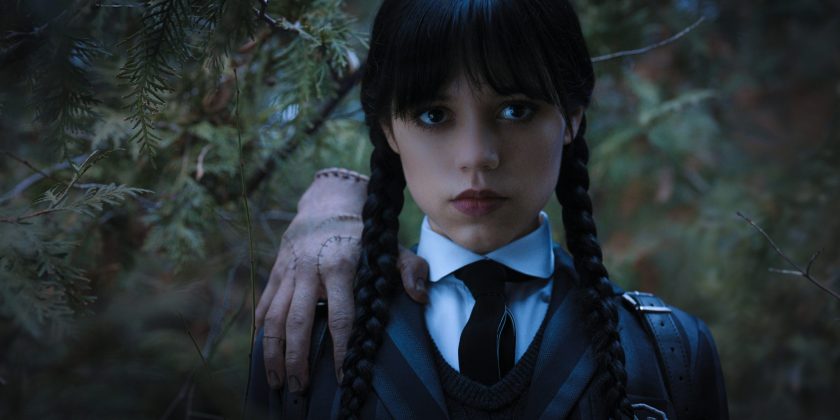
Wednesday. (L to R) Thing, Jenna Ortega as Wednesday Addams in episode 104 of Wednesday. Cr. Courtesy of Netflix © 2022

A New Woe

or, How Netflix’s Wednesday isn’t like the other Addams Family stories.

Preface: I ADORE the Addams family. I always have. Even as a child, I loved the Addams family (and spurned the Munsters). And I was still a teenager when I discovered the darkly morbid comics of Charles Addams, the cartoonist who created the characters who would eventually bear his name. (Fun fact: the original cartoon characters had no names, being typically drawn in one panel vignettes that simply didn’t need such to land the punchline.)

Tl;dr — I just finished watching Wednesday, and I love it, but there’s a caveat, which I’ll get to later. I think Alfred Gough & Miles Millar did an extraordinary job of walking the fine line between the strange and often disturbing humor of this world. In fact, there are elements of this show that directly play off details from the original comic strip, from the look of Gomez Addams to Mrs. Weems (originally the family babysitter) with remarkable faithfulness.

If I’m being honest, I have very little to complain about.

But since that’s never stopped me before, here we go:

  • Given that the Hulk-like transformation of a certain character absolutely shreds clothing, how did no one notice? Also, screw changing into a monster, it’s their quick-change ability that’s the real super power here.
  • “Goody” is a title, damn it. Short for “Goodwife” and used for older married women of commoner status in Puritan society. This is like naming your daughter “Auntie.” It makes no sense unless used as an example of Addams Family whimsy, in which case, I’d have appreciated a lamp shading of that fact.
  • Hunter Doohan looks every bit of his 28 years, and fat chance I’m going to sign off on him being a teenager. As a result, it makes his character’s attempts to romance Wednesday creepy af, and I’m 95% certain that wasn’t intended.
  • That is not how emojis work.

That’s it. Those are my complaints.

So let’s talk about that caveat: the show’s relationship with humor. Ironically enough, also the show’s relationship with violence, death, and empathy.

Basically, let’s talk about murder. (Please note, I am not including the 2019 animated cartoon in any of this discussion.)

This isn’t a critique of Wednesday, the TV series, because I actually think it attempts to patch a flaw I’ve always felt existed within the Addams Family. It doesn’t always do this successfully, and in fact it often dips into narrative dissonance in the attempt, but the fact that it tries at all is really interesting.

Here’s the problem: Death has no meaning in the Addams Family.

It’s not just that they’re psychopaths (although they are) but that death and violence is, literally, a joke.

I’ll use a scene that appears in both the original Charles Addams cartoon and in the first movie as an example: Morticia sees a knife in Wednesday’s hand, asks if that’s meant for Pugsley, and upon hearing ‘yes,’ upgrades the weapon to a significantly larger and more deadly cleaver before sending her daughter off to murder her son. Which is horrifying and grim and funny as hell. And yet, in all these “play” sessions (which mirror the equally violent rivalries between Gomez and his brother Fester), we never see either child with significant injuries. The intention of violence is shown. The consequences? Never. I’ve seen a lot of attempts to explain this, most of which amount to: they’re monsters and thus presumably either heal or are flat-out unkillable (this later seems unlikely given that Wednesday’s greatest ambition at one point was to be burned at the stake like her Great Aunt Calpurnia). But it’s fine! This is playtime, let’s pretend, and we laugh and take it that way. No permanent harm done, even if murder is the most popular topic of conversation at every Addams family meal.

Unfortunately, this excuse comes crashing to the ground when it collides with characters we know are not monsters. Characters whom we can’t convince ourselves just ‘got better’ off-camera.

This happens viscerally in Addams Family Values, when the children are sent to Camp Chippewa and end up making their own unique changes to the Thanksgiving play — which culminates in them literally burning Wednesday’s rival Amanda at the stake and roasting two camp counselors alive. Now, the camera cuts away before we know for certain that Wednesday puts the girl to the match, or that the counselors die in their own immolation, but there’s little reason to think this isn’t exactly what happens. And we know damn well that none of those three were unkillable, unlike the Addams family themselves. Does the FBI ever come knocking at the Addams family door sometime later, wanting to talk to Wednesday and Pugsley about a little light mass murder? No way to know. (I don’t assume the Wednesday TV series exists in the same continuity, and there was no sequel to Addams Family Values. RIP Raul Julia, you absolute legend.) Within the framework of this story, people were (probably) genuinely hurt and (likely) really died. The jokes land, but only because we could (and did) cut away and never, ever confirm what actually happened.

It’s a matter of timing. Everything about the humor of the Addams Family, from the original cartoons to the TV show and movies which followed, relied on perfect timing — being able to cut away from the story at just the right moment, leaving the grisly results to the imagination but never on the page or screen. Yes, the entire Addams family is gathered up on the roof to pour boiling oil on the very mortal Christmas carolers below, but as long as we don’t see the oil land, we can laugh.

Which brings us to Wednesday, where we can’t just cut away, because in a serial-format TV show, cutting away from a scene without ever explaining what happened is called a continuity error.

(Warning: lots of spoilers follow.)

Our story starts off when Wednesday is sent to boarding school after she introduces two bags of piranhas to the swim-team’s pool in revenge for their bullying of her brother. The scene is paced in perfect Addam’s family style: We have the intro, Wednesday’s sadistic glee as she watches the fish do their work, the captain of the swim team attempting to exit the pool just as the piranha reach him, red blooming in the pool. Cue camera cut-away just as he starts to scream.

We later learn that he lost a testicle. Presumably, he could have lost a lot more. Make no mistake, this is at least assault, probably attempted murder. Presumably the only reason Wednesday gets away with it is because she successfully committed a crime too weird for the police to want to write up. Mostly, it’s still the classic Addams Family joke, just one with a little more follow-up than is typical.

But as a result, Wednesday is sent to her parents’ old boarding school, The Nevermore Academy, where all the weird monsters that live in the greater Addams family universe are finally given a name: Outcasts. And here, one of the major plot threads that runs through the early part of season one is the revelation that Wednesday’s father Gomez might be a murderer.

Um…and?

How is that remarkable? How is that news? Isn’t every member of the Addams family likely the perpetrator of at least a little homicide? It’s not even an ugly, sneaky kind of murder, but a crime of passion between two high school boys literally fighting over an equally young Morticia–a dramatic duel in the rain that is absolutely in Gomez’s wheelhouse.

And yet, Wednesday is upset by the idea that her father might be a murderer. Wednesday claims to be completely blase about murder, snarking when her mother tries to emphasize the seriousness of the piranha incident (“That boy’s family was going to file attempted murder charges. How would that have looked on your record?” Morticia says. To which her daughter replies, “Terrible. Everyone would know I failed to get the job done.”) but she also goes to great lengths to prove her father’s innocence. She’s clearly upset about his welfare, not his reputation. Likewise, her parents put off telling Wednesday the truth (that it was Morticia that killed the boy, and it was self-defence), because…

Because. Because Wednesday isn’t that kind of show. It can’t be.

The arrival of Wednesday to Nevermore is a watershed moment. Besides kicking off the plot, death suddenly matters. We can’t edit out consequence. And honestly? I kind of love that the writers largely don’t try (mostly–the Poe Cup race does have one classic Addams family homicide moment, as a treat).

The Addams family members continue to joke about and trivialize death the way they always have. When Wednesday confesses that there have been two murder attempts on her life in the week she’s been at the school, her father responds with nostalgic delight. They behave exactly the same way they always have, the same way we expect. They are completely faithful to the original material — or at least, they start off that way.

The brilliance of this show, imo, is that their joking is revealed to be a bluff, and reality calls them on it, hard. The sheriff is not willing to overlook Gomez’s crimes and yet when he discovers he’s wrong about them, is man enough to apologize (and Gomez is man enough to accept that apology). The other monsters going to Nevermore (even the ones who support Wednesday) are unwilling to be complicit in her plans to torture someone for information. Everyone is horrified when one of the students is seriously injured. Murder is bad. No one is killed as a punchline, and Wednesday, despite all her protests to the contrary, has just as strong an emotional response to her loved ones being injured as a “normal” person would. The show gleefully calls her on her bullshit, which results in her slowly realizing she cares (even if she’ll never admit it). By playing it absolutely straight, the writers have interjected a depth into the Addams Family I honestly wouldn’t have thought possible.

Part of this is accomplished by giving an usual amount of depth to the other characters. Bianca, a siren with mind-control powers who is set up early to be Wednesday’s rival, is not treated the way Amanda from the movies was, but is a real person with her very own real problems. When she and Wednesday finally reach an accord, it’s with no shift at all to Bianca’s core personality–a real rarity in these sorts of shows where the villain’s face turn often feels like they’ve been replaced with a doppelgänger. (Likewise, Wednesday’s growth arc is satisfying without feeling rushed or fake.) Enid? Oh, I could wax on about Enid, the bubbly dorm mate foil to Wednesday I absolutely ship (sorry, Xavier and Tyler). I expected her to be two-dimensional. She wasn’t. I could go on.

Nobody is just a joke, and as a result, neither are their deaths. Even the damn coroner, who we see on screen for approximately three minutes in total, gave me enough background and personality to feel genuinely sorry when I realized he’d been murdered.

People have real feelings, and Wednesday can hurt those feelings, and this too is a consequence that the writers don’t cut away from. I could still like Wednesday while simultaneously cheering when one of her friends finally gave her the verbal lashing her manipulative behavior so completely deserved. People are complicated.

The result of which is a show that I found far more interesting than my expectations led me to believe. I can only hope Alfred Gough & Miles Millar show as much care in season 2.

But I will definitely be watching it.

Wandering in with a Starbuck’s Cup

Hey, what’s up?

So…it’s been uh *checks the calendar* three years.

Wow, it really has been three years. Okay…so I guess I haven’t been updating, have I? All right, let’s do this. What’s been going on in my life?

The obvious answer, as it has been the obvious answer for everything, is “living in the age of active pandemic.” Which has been heartbreaking on many levels, not least of which because it turns out that ‘I told you so’ stops being a lot of fun when millions of people have died.

On a personal level? I finished a five-book epic fantasy series for Tor Books. Yeah, that’s right. That baby is DONE. The last book in the series, The Discord of Gods, comes out on April 26th (which means you have not missed your chance to pre-order!) It’s a tremendous accomplishment and a strange feeling of loss all the same time. Because it’s not just that I’ve written four books in the last three years (each over 200,000 words), but I have been involved with various characters, concepts and bits of world-building that would become A Chorus of Dragons for slightly longer than that.

Say, thirty-five years. And now it’s done.

If you’ve ever wondered why authors go back to a world that they’ve written a series in, believe me when I say it’s not just for another paycheck. It’s because you start to miss it. The characters, the places, the concepts. I’m too new off the high of finishing to be there yet, but I can already see the writing on that wall.

Naturally, I have started on my next book. New world, new characters, new setting. It’s wonderful to be able to really stretch my world-building legs and make something new. I really can’t wait to introduce you to this world. It’s a lot of fun. By which I mean incredibly dangerous and full of stuff that would love to kill my main character. As is tradition.

I hope you’ll join me. And in the meantime, I’m going to try to keep updating this site (Note the “try” here) and keep telling stories. That said, what do you want me to talk about? I’m officially taking requests (leave a comment).

Love you all. Stay safe out there.

Monsanto Wants Your Soul (book reviews)

Or, reviews of two dystopian novels: Karen Faris’s Grumbles the Novel, Part I: Take a Pill and Chuck Wendig’s Under the Empyrean Sky. (Note: I purchased both books, and was not asked to review them.)

So a few weeks ago my business required me to do a fair bit of airplane travel. In a perfect world, that would mean five or six hours of solid writing, but coach airplane chairs are so small it’s almost impossible to do any real typing without smashing my elbow into the poor bastard sitting next to me. So instead I read a couple of books.

In hindsight, I was amused to discover that I had unwittingly chosen books of a THEME, that theme being: GMOs are going to eat you.

In both cases, literally.

The first book I picked up was part 1 of Karen Faris’s Grumbles series. Now, I’m going to start with what I hated about this book: it’s not a complete novel, but ends just the story is starting to ramp up. Now, trilogies can be tricky this way, and sometimes the first book ends just as the quest is really getting started, but I felt this ending was jarring, and this book did not feel complete to me. I actually approached the writer about this, and she admitted that breaking up the book was the publisher’s decision, because they had felt the original novel was too long.

I thought we were past the age when publishers would pull a Tolkien on writers and force them to break up books, but apparently NOT.

So if you start to read this and are really liking it? Realize that you’re going to want to buy parts 2 and 3 at the same time, so you don’t have to stop. All three books are available.

But what about the book? Okay, so picture if you will a book as the love child of Terry Pratchett and Corey Doctorow. And that love child would be Grumbles the Novel. Set in the future in a United States where it’s illegal to grow your own produce (more on that theme later) and where the wild flora is both toxic and carnivorous, the novel follows the exploits of Pettie Grumbles, one of the last postmen in a world where the only ‘safe’ nutrition comes from vitamins and the post office is the last bastion of mystery men and spies.

One of the things I found so fascinating about this story was the lack of modern judgement values. Many of the people in Pettie Grumbles world are cheerful, not because they think their world is fantastic, but because it’s often human nature to make the best of things and (important) because they frankly don’t know any better. In a world where mandatory education has been eliminated as an affront to civil rights and where the most beloved political party are actual pirates (they run on a platform of total honesty about their motives,) the idea that it has ever been different is a topic most people simply cannot grasp. Drugs are cheap, the sky is always blue, and whatever you do, don’t drink the tap water.

It’s the most light-hearted, fun, grim dystopian cautionary tale I’ve ever read, frankly.

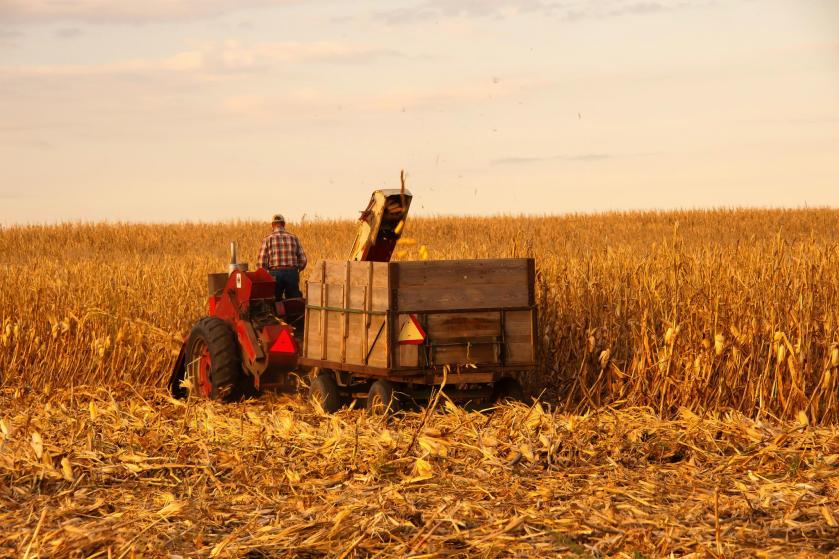
If potatoes are the mandatory staple crop of Grumbles’s world, corn is the demon plaguing the Heartland of Chuck Wendig’s Under the Empyrean Sky, specifically a strain of corn called Hiram’s Golden Prolific, so aggressive that the local farmers don’t raise it so much as desperately try to control it. The lowlander farmers who are forced to raise the crop for the Empyrean elite who float in city-ships overhead in a Morlock/Eloi relationship can’t even eat this corn: it’s only good for bio-fuel, plastics, and manufacturing, and is toxic for human consumption. It’s illegal to grow anything else, any idea which is harshly enforced by flame throwers and drone strikes. The farmers are provided food they can eat in exchange for the corn harvested, but that means if they’re under quota, people starve. There’s also a very interesting hint of Mother Nature’s revenge in a feared disease called the Blight.

Wendig’s Heartland is a grim place, as grim as any farmer who knows he’ll lose the farm with the next poor harvest, as grim as any dust bowl cluster of hopeless migrant farm workers. Hiram’s Golden Prolific is an unsustainable crop: besides depleting the soil with the next decade, the chemicals used to keep it under control are horrifically toxic and cancer causing. Into this world is born Cael (I see what Chuck did there) McAvoy, a teenage leader of a scavenger gang who has to deal not only with his own enemies, but his father’s as well. Cael means well, but he’s a typical seventeen-year-old, which means those good intentions are laced with healthy doses of hormone-driven stupidity. But when he discovers strains of edible crops that seems to be capable of overcoming the growth rate of Hiram’s Golden Prolific, the stakes become much higher than he can imagine…

If Cael is a straight-forward farmboy Destined For Great Things, his friends (and enemies) deserve a call-out for being so fantastically articulated. Wendig skillfully balances POVs to make sure that no character is ever completely two-dimensional, and to make sure we realize that even bullies are made, not born. Cael’s first love Gwennie may make some choices that Cael can’t understand, but we the reader certainly can, and she quickly proves she’s not just some princess who’s only role is to be rescued. Indeed, I find myself wondering just who will end up saving whom by the time this story ends, or if Cael will grow enough to make up for his own poor decisions.

Both books definitely left me reaching for the next in the series.

Disclosure: When I originally wrote this, Karen Faris and I had only the most cursory contact with each other, although we did have a common friend. I bought this book with my own money, and Karen did not ask or pay for this review. However, since then we’ve become friends who both write for http://www.rewritingmarysue.com, and Karen and I have started reviewing books together for that blog.

Thoughts on Motivation

I thought we might talk a little about motivation. You know that thing that actors are always asking? “What’s my motivation?” That.

I was recently watching a movie (it will remain nameless but it rhymes with Gorilla) where the primary motivation for the majority of characters was “what will advance the plot to the next action scene?” The characters had no other plausible motivation. They made decisions that seemed to be based solely on what the director needed, not what was internally consistent for their own histories and personalities. Self-interest wasn’t invited to the party: they performed actions which made zero sense from their own personal narratives but which did lead to awesome giant monster scenes. Needless to say, I wasn’t very impressed. Actually, I was flabberghasted.

Why am I talking about this as a writer?

Because this happens with books too.

Let’s discuss.

There is a meta-level motivation for anything that happens in a book, and it’s usually (although not always) ‘to advance the story.’ Why did the villain kill the hero’s brother? (So the hero would have a reason to be in conflict with the villain.) Why didn’t the hero just make the phone call/go online/ask someone so she might have found that vital piece of information she needed? (Because otherwise the book would only be 50 pages long.) Why did the villain kidnap the girl? (Because otherwise the hero wouldn’t go after him.) Are these answers? Yes. Are these good answers? …no. No, they’re terrible.

Seriously, don’t do this.

The main answer for why a character does something should always be: because it made sense for that particular character to do so, given their background, their needs, and their motivations. Why did Joe Chill kill Martha and Thomas Wayne? Because he was skittish, strung-out, and nervous petty criminal who panicked during a mugging. Why does Loki try to conquer Midgard? Because he’s never gotten over his own insecurities about being second fiddle to his brother Thor, pushing Loki to seek out ways to embarrass, corrupt, or screw up anything his brother loves. Their actions, and the consequences of those actions, are consistent within their frameworks.

If on the other hand, a character who only exists to prop up the main character’s back story might do something that’s bluntly suicidal, just because the writer needs them to do it.

So ask yourself why something is happening in your story. An event, an action, a choice. Is the primary answer:

  • Because otherwise it destroys the main premise of your story?
  • Because it’s neat (i.e. because explosions are cool?) [This one might be okay, but be careful. It’s still laden with traps.]
  • Because otherwise the story will be shorter than you originally planned?
  • Because you need this to happen to lay the foundation for the next scene?
  • Because if this doesn’t happen, the hero has no reason to move forward (often a cause of “fridging” a love interest?)

If any of these responses resemble your own answer, you need to give serious consideration to going back to the drawing board. A yes here means the odds are good that there is a core problem with your story, and you likely can’t fix it by piling on a lot of cool scenery or neat action scenes and hoping your audience won’t notice. (Your audience will notice.)

I’m not immune to the lure of an expeditious motive (no writer is.) My husband has a talent for picking apart a scene I’ve created and asking tough questions about the motivations behind them. “Why would this character do this?” He forces me to justify my characters’ actions, which is awesome.

For example, in one of my manuscripts, the master villain kept throwing peons at the problem, and happily for the hero, the peons weren’t up to the task.  He was powerful enough that he could have easily handled the matter himself, and stepping back and letting his minions flounder around (or more to the point, tolerate any more floundering from them) just seemed coy (not a trait one associates with powerful villains.) There was no good reason the villain would show that kind of reluctance. I realized I’d been holding the villain back because I thought I needed to on a metaplot level (because that’s how it works in movies and books, right?) rather than because it’s what made sense for the villain, given his motivations and personality.

When I pulled off the self-imposed restraints, the plot sailed (and the hero was really in a whole lot of trouble, which was even better!)

Now, I’m a fan of figuring out the motivation first, the consequences second, but it can be done in reverse. Dwight V. Swain, his book Techniques for the Selling Writer, advises writers that they should decide where they need their plot direction to go, and make sure that the author gives their characters motivations which match that goal. If you need your villain to murder the hero’s father in the first act, make sure the villain’s motivation’s support that action and are consistent with that desire (did the hero’s father fire the villain? Steal his love interest? Turn him into the police? Mugging gone bad behind the Monarch Theater?) If you know you need your hero to do a given thing, work backwards and create the background or motivation which results in that action.

I admit I’m not personally a huge fan of this, but I put it out there because I recognize that just because something doesn’t work for me doesn’t mean it won’t work for you. For me, this feels a bit like begging the question, and runs the risk in a series of having characters whose motivations seem inconsistent. (I think this method might work very well for short stories though.)

My personal favorite is to create motivations for characters which conflict with each other, but are consistent to their own background, methods, and personalities. In one of my stories, there’s a man named Darius Temple who is trying to build up his community and eliminate the deprivations of both gangs and corrupt cops. That’s his motivation. He sees himself as a champion of the community — which puts him very firmly at odds with someone like gang leader Crazy Tez, who  would far prefer to destroy and dominate that same community, whom he views as an invading occupying force. Both of these men are presented as adversaries to the main character, but both men have consistent reasons for their actions. Indeed, both men would swear they are right to act as they do. The fact that their motives conflict with both the hero and each other? Perfect.

Just don’t have your character’s only motivation be getting to the next scene.

Kumiho

Kumiho was a short story I wrote about 10 years back, and semi-autobiographical. I chanced upon it when looking through some old files and decided to share it.

_______________

Since my boyfriend lost his car last summer, I’ve been taking the bus a lot. You meet a weird lot riding the bus, especially in Los Angeles, where public transportation is the option of last resort. There are the people who hop on and immediately open up the cases of stolen watches, the homeless who haven’t bathed in weeks if not months and sometimes, the people like me who are just enduring the commute to work. These are generic descriptions, but there are some very specific characters I’ve encountered: one fellow who carries a white cane and pretends to be blinds so he can ride for free; an old sweet-looking grandmotherly woman who always wears the same tweed suit with lace gloves and is so terrified that there won’t be any room for her on the bus she always cuts in front of the line, even if she has to push others out of her way.  I remember less benign sorts too: the young man mumbling to himself, writing ‘kill’ over and over and over on the pad of paper in front of him; the crack-high gangbanger who tried to pick a fight with a bunch of scared high school kids and waved his gun around on the bus, announcing: “I’m a god-damned Blood, so you had better be showing me some respect!”

This isn’t about any of those people.

When I stepped onto the bus this afternoon (after being elbowed out of the way by the old woman with the lace gloves), there was another old woman already seated. I sat down next to her, as most of the places were taken, and for some reason I was less than enthusiastic about sitting down next to she-of-the-sharp-elbows. I had my book with me. It was pretty close to a perfect arrangement: I could sit there and read, the old woman would just sit, and we wouldn’t have to so much as look at each other.

She had other ideas; she wanted to talk. Her English was quite good, but she’d never lost the Japanese accent.

There’s a hospital near where I work, and that’s where she was coming from. Her husband was there. She was coming back from visiting him, and she was very excited because today was the first day in six days that he’d been able to eat solid food.

I told her congratulations. That’s great news. I tried to read another paragraph from my tale of the Black Company.

No good. She wasn’t finished.

She told me the doctors said he probably wouldn’t make it. He’d had a heart attack and he hadn’t called a doctor when she told him to, and so she’d been forced to call 911 herself. They’d been forced to operate.

I told her I was sorry for her, and in the completely callous manner of a seasoned bus veteran, tried to go back to reading my book.

She smiled at me. Her eyes had the faint beginnings of cataracts, but they held no hint of sadness. No, she told me. He would survive. He had eaten today. He’d said he wanted to go home. From now on, she would make sure he took care of himself.

A third time, I tried to politely agree, ignore her, and go back to reading.

The old woman touched my hand. I startled, because well, she’d touched me. There’s some things you just don’t do. There was no threat to the touch though, no danger. It was just…unnerving. She looked at me and said: “You have beautiful hands. They are perfect. My hands were never so perfect.”

I stared at her. “Thank you, I…”

“Pretty hands. You don’t do anything to make them like that, do you? They look lovely all on their own.

I’d never really thought about it. I’m an artist, a writer. My hands are my life. Does sun block 50 count?

I was starting to feel embarrassed, so I said: “I’m just younger. I bet your hands looked just like this when you were my age.” She had a petite sweetness about her, a prettiness that suggested she probably had been quite stunning when she was young.

“I was your age when I met him in Japan,” she told me. “He was an American soldier.”

“Oh.” I resisted the urge to ask if he had been with the occupational forces. My ex-husband’s father had served there, after World War II. He’d come back to war trophies: a Japanese army officer’s ceremonial katana, two gorgeous silk embroidered tapestries, and two very beautiful, if somewhat unconventional, paintings of Mount Fuji painted with acrylics on silk. Frank had always claimed he’d paid for them, and I had no reason to doubt that, but I still didn’t think it would be very tactful of me to bring them up. Besides, she looked old, but she didn’t look that old.

“He gave me a diamond,” she said, holding up her hand. She whispered that, which I thought was prudent. She wore a wedding/engagement ring combo on her wedding finger. If it was diamond, it needed to be cleaned something fierce. She wore a string of pearls around her neck and another ring on the middle finger of her left hand, but the emerald was too big, too clear a green, to be anything but glass. The jade ring on her right hand was probably real enough. It was cut to look like a fox’s head. Probably made in China.

“He told me he would come back in five years to marry me. Five years can be a long time.” She laughed at the memory.

I looked at her. “Yeah. It can.” A damn long time, I thought. I didn’t know any American girl who would have waited that long, not for a soldier from another country, not in an age where there was no internet or cell phones to keep in touch. I wondered: had he written a lot of letters?

“Five years later, he came back, just like he said he would,” she explained. “That was when he was finished twenty years in the Army, you see. He retired. He said he gave me three things: his word, his heart and his time. This way, he could give all of himself to me.”

I started to get a funny itching sensation at the back of my throat. “Wow. That’s so sweet. How—how long have you been married?”

“32 years.” She smiled. “I love him very much. He’s a very good man. A very honest man. When he took a job, later, he would always come home the same time so I would know where he was, so I would know he wasn’t fooling around. When I think of our love, I feel very young.”

20 years in the military, with another 32 tacked on to that, and assuming he was 18 when he began…her husband was at least 70 years old. I couldn’t really tell how old she was. But him? 70 years old and a major heart attack? The lump in my throat grew.

She told me more then. How she had teased him, because he hated Japanese food but married a Japanese woman. How she preferred sticky rice, but she made him Minute-Rice, because that’s what his mother used to make him. How scared she had been at the heart attack, because she couldn’t move her husband. He was big man who weighed 200lbs, and she looked like she might break 100 if she was wet and holding the housecat. How glad she would be to have him home again. There was no doubt, no uncertainty, in her voice. How could he possibly die if he was hungry, if he wanted to come home?

It would be different this time. She would make him take care of himself. He’d always been too busy before. Too busy taking care of her.

I realized then, why she was telling all of this to a stranger on the bus: because she had no children, no family in the United States. Who knows? Maybe she had no family in Japan, either. In any case, she had thought her husband wouldn’t survive, that he was dead. The doctors had told her he wouldn’t likely make it, but here he was, opening his eyes, talking to her, eating real food and saying he wanted to go home. She was so full of joy she was ready to explode.

She had make someone understand. Anyone. Me.

Her stop came up before mine, and as she stood, she turned and asked me my name. Normally, I don’t give that out, but in her case I did without thinking about it.

She smiled and clapped her hand over mine. “Sweet girl. I’m Kumiho.”

I stared after her in shock as she walked down the bus steps.

Kamiho, I told myself. It’s the accent. You misunderstood her. Kumiho? That’s all wrong. That’s not even Japanese. A kumiho is a Korean nine-tailed fox. It’s something out of myth and legend, not real, and certainly nothing a parent would ever name their child. She must have said Kamiho. That’s a perfectly normal name for a Japanese woman, isn’t it?

I didn’t really know.

The bus moved on, and I lost sight of her. I never saw her again, even though I took that route every day for another year. Maybe we just missed each other.

When I stepped off the bus, I took the long way home, thinking about fox women, honor, and American soldiers, and how damn little I understand about love.

A Galaxy Too Close: Sexual Violence in Season 2 of Andor

I’m starting to think I need to create a sub-category on this blog dedicated purely to discussions of sexual violence in media, because, here I am again.

Let’s get this out of the way: there will be spoilers here.

So, a little background: after watching the first three episodes of Season 2 of Andor, I was not surprised that my husband was upset and bothered by a scene of sexual violence that occurs. I was a little more surprised, however, to discover that I was not. At all. I decided that I needed to unpack why that might be, because as a general rule, I am very rarely cool with depictions of sexual assault in media.

Anyone who knows me knows that I’m a huge Star Wars nerd. I grew up on it. I played with the action figures. I know a truly embarrassing amount of trivia about the larger Star Wars universe. I’m still hoping that Disney’s going to give me that call someday to hang out in the writers’ room. (Seriously, Disney: call me.)

The thing is: this is not the first time that Star Wars has depicted sexual assault, but apparently, that earlier instance didn’t “count”—because it was Jabba the Hutt and Princess Leia. Just today on social media, I saw someone say that Jabba couldn’t possibly have sexually assaulted Leia, because he wouldn’t have been capable of the act of penetration. As if that’s the only definition of sexual assault. Which was when I realized what the problem really was: that earlier instance hadn’t depicted sexual assault.

It had titillated it.

When people talk about male gaze in cinema? They’re talking about this. Everything about what happened to Leia was focused on the sexualization of a damsel in distress; the gold bikini, the heavy chain and slave collar, the humiliating acts, and the promises that she would “learn to appreciate” Jabba. Even as a teenager, I recognized that this was coding for sexual assault. The fact that Jabba was probably not physically capable of penetration didn’t make it okay or remove the trauma.

But it was sexy, right?

The problem, of course, was both how and why it was filmed. Leia’s objectification was an ‘oh no! Luke had better rescue her!’ ratcheting of tension in a scene that wasn’t even about her. It was about Luke, and this was just a complication, a raising of the stakes. All the while the camera lingered over her body. And if you try to tell me that slave bikini hasn’t had a major presence in the fantasies of men ever since, I will call you a liar.

Fast forward to Andor, Season 2.

Like Leia, Bix isn’t *technically* raped. No penetration occurs. Heck, Jabba had more success in terms of how far he got. Bix’s attacker is taking advantage of his position, his power, and Bix’s illegal status to try to get a little side action with a pretty girl, and part of why it’s horrifying is that in the beginning he tries to pass himself off as ‘just a nice guy.’ I’m sure that if you’d asked him before all this, he’d have sworn up and down (and believed it, too!) that all his previous assignations were entirely consensual, even though it’s completely obvious that any ‘yeses’ only occurred because the migrant women were desperate and too scared to say ‘no.’

When Bix does say no, he reacts with violence.

None of this is shot provocatively. Bix doesn’t look sexy. The fighting is dirty and ugly and bitter. When Bix kills the lieutenant, it’s nothing so heroic and cool as choking a Hutt with her own slave chain. Bix is clearly traumatized by the experience. It’s uncomfortable. It’s meant to be.

The Return of the Jedi said: This is hot. Andor, Season 2, says: This is horrifying.

Because this is a chillingly realistic portrayal of the behaviors that happen in totalitarians regimes. We don’t need to guess that. We know that, because history exists. And sure, maybe this behavior is technically illegal in the Empire, but so what? I’m betting as long as the soldiers are making their quotas and never picking on anyone important, nobody checks.

This is, in many ways, what makes Andor the most radical Star Wars series to date. It understands that true tyranny isn’t flashy. It’s boring, bureaucratic, normalized. It’s what happens when cruelty is systematized and justified as “order.” It’s what happens when individuals become resources, bodies, numbers. What happened to Bix didn’t happen to her because she was royalty (as the mistreatment of Leia has been retconned to explain) but because she isn’t. Because she’s nobody and she won’t be missed.

Contrast that with Leia. As much as I love her—fierce, brilliant Leia—the visual framing of her captivity in Return of the Jedi was always about spectacle. It wasn’t about Leia’s trauma; it was about what Leia looked like while being traumatized. She was an accessory to someone else’s fantasy, both in-world and behind the camera. (To be fair, that’s always been a problem with the original trilogy’s treatment of Leia: see her comforting Luke on the loss of a teacher he’d known for a few days while completely ignoring that she’d just lost her entire freaking home planet.)

Andor doesn’t make that mistake. Bix’s assault is about Bix. No one comes to rescue her from the assault. Her suffering is not entertaining. It’s brutal and ugly and real. If I shuddered while watching it, it was because it was too relatable. Andor seems determined to show some of the uncomfortable realities hiding in the shadows of the Star Wars universe, and much like Season 1, it’s doing so with a lot of skill and nuance.

I’m not complaining.

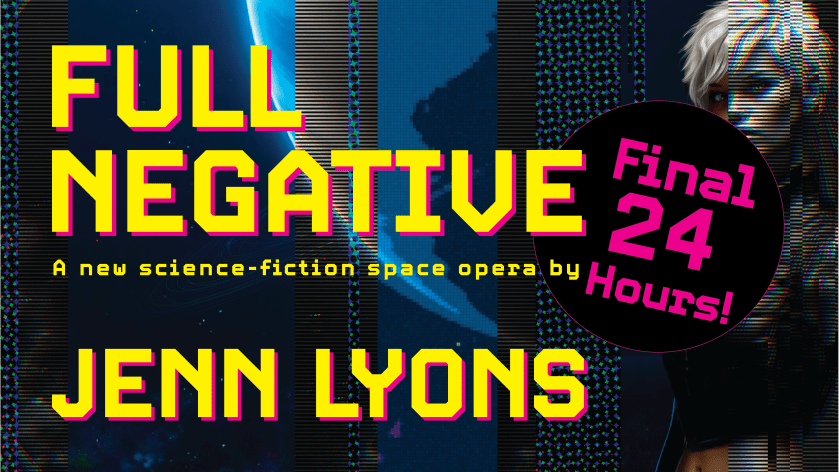
Splash page for the scifi crowd-funded novel FULL NEGATIVE.

Last Chance to Pledge for Full Negative Book

Friends. Readers. Fellow nerds with impeccable taste.

We are officially in the home stretch. The final 24 hours. The last lap. The dramatic climax of the movie where everything explodes in slow motion and the music swells and someone says something heroic right before punching a fascist in the face.

(Okay, that last bit’s just wishful thinking, but after the week we’ve all had, I think we deserve it as a treat.)

My point is: we’re down to the last days to pledge for FULL NEGATIVE, my big, bonkers scifi space opera that asks the question: what are you willing to give up for freedom? And also, what happens when the trolley problem is measured on a macro sale.

(Spoiler: it gets messy.)

Why does it matter?

Because, for me right now, and hopefully for you, later, this isn’t about publishing a book. It’s about launching a world—telepaths, shapeshifters, space empires, doomed romance, glorious betrayals—and all the weird, wild joy that comes with that. It’s also about proving that stories like this—genre-rich, character-driven, unapologetically extra—have a place in the world. And yes, okay, also on your shelves. Possibly in multiple formats. With cool merch.

On that note, I want to send a massive, cosmic-level thanks to Eagle Eye Books, Inkstone Books, Mysterious Galaxy, and Read It Again Books for being so incredibly supportive. You absolutely did not have to, and I’m incredibly grateful that you did, anyway.

What I’ve learned

There have been hard, valuable lessons. Ones which, should I do this again, I’ll keep in mind for the future.

  • Organizing the crowdfunding campaign was almost as much work as writing the dang novel. (I’m joking. Kind of.)
  • I needed to start much earlier (I knew that going in, but I forgot where I left my time machine, so here we are.)
  • What you think people will be interested in may not, in fact, be what people are interested in. (Our Seris tier is our bestselling tier by far, which I did not predict.)
  • I’ve received a LOT more support from Indie booksellers than I ever would have expected.
  • Tariffs SUCK.

On that note, we’ll be talking about that more in the future but we’re hoping that the tariffs will only minimally impact us, but there can be no doubt that they will impact us. (They’ll impact everyone.) At least some of things we are offering, like the ebook, audiobook, and settings guide, aren’t things that can be subject to tariffs, and others (back catalog books, for example) are already in my garage.

I think it’s also worth emphasizing that pledging for this isn’t money going to a giant corporation. You’re helping ME get through what is promising to be a spectacularly ugly year, and I am extremely grateful for that.

Stay sane out there and never take the door they give you.

—Jenn

The link to our backerkit page is here.

Your Book/Game/Project Needs Better Promotion (and so does mine)

Hello, dear friends!

So, a funny thing happened last night. Some context: every other week, I play in a Fading Suns TTRPG campaign with Bill Bridges. Yes, that Bill Bridges, the one who co-created Fading Suns and worked on little-known titles like Vampire: The Masquerade and Werewolf: The Apocalypse. (Fortunately, he’s also an incredibly gracious human being and has never once pulled the dreaded “Well, actually…” on the GM.)

Anyway, last night, our GM casually mentioned that a revamped, enhanced edition of Emperor of the Fading Suns—the 4X video game that Bill and Holistic Design, Inc. originally created—is launching this Friday, April 4. Better graphics! Better sound! More empire-building goodness! It’s hitting Steam, and if you want to check it out, here’s the link.

Naturally, I turned to Bill and said, “Why didn’t you mention this?”

To which he replied, “I didn’t think I needed to. It’s been all over social media for weeks.”

I, of course, informed him that my social media feed had not breathed a word of it.

Cue much cursing of the algorithm. And cue me having a moment of clarity because this is exactly what’s going to happen when my campaign for FULL NEGATIVE ends. I guarantee you that once the dust settles, I will have friends—actual, real-life friends—say to me, “Wait, you had a crowdfunding campaign? I wish I’d known!”

Because no matter how much we shout, our voices don’t always carry as far as we think.

So, you know what I’m about to ask. If you haven’t already, please spread the word. Every little bit helps, and we are down to the final nine days. (Nine days! How did that happen?)

Also, in case you were wondering why I’ve been a bit quiet: it’s for a very good reason. The manuscript for Full Negative is officially with the copy editor! She’s fantastic, and I have no doubt she’ll do an incredible job. It’ll take a few months (because rushed copy editing is a terrible idea), but everything is on schedule. And that means we’re getting closer to putting this book into your hands.

Stay tuned—and thank you, as always, for being the best community I could ask for.

Much love,
Jenn Lyons

P.S. Why is there a photo of kittens at the top? Why NOT? Seriously. We need all the cuteness and love we can get right now.

Wrap-around art for the Full Negative cover with the title of the book centered.

Saturday Update – Now with more art and add-ons!

It’s Saturday, which means it’s time for another update!

By popular demand (and because I have no self-control), we’ve added some of my back catalog as add-ons. If you’ve already pledged but now find yourself thinking, Wait, I need that, don’t worry—you can update your add-ons by heading over to ‘Manage my pledge’ in your account.

We’re also teetering on the edge of hitting 200% funded—less than $100 to go! When we cross that line, there’s a solid chance we’ll land on Backerkit’s front page under the ‘Hot Now’ section, which would be amazing.

Meanwhile, work on Part 1 of the Setting Guide is moving right along. We’ve already got two fantastic pieces of art, plenty of snarky text (because of course we do), and a whole lot of juicy historical lore. If you haven’t seen the cover preview yet, it’s lurking over in the Promos & Merch section of the Discord.

That’s all for now. Thanks for indulging me as I ramble about this—it’s kind of a big deal, so… yeah. Excited.

See you soon and as always, be careful out there!

The Backerkit link is HERE.

The cover for the first part of the Full Negative Settings Guide: The Past, copyright 2025, Jenn Lyons

Part I: The Past – Our Launch Story and Goals

Well, dear friends, we are now officially launched and funded. It’s just a matter of how high we’ll go. Hopefully high enough to unlock all of the setting guide, but for now, I’ll happily deal with what we have, namely Part I: The Past.

For anyone who’s curious as to why I spread out the setting guide over multiple update goals, I can explain it pretty easily:

Because I’m doing all the art.

Time spent doing the art is not time spent writing or being paid for that, so…if I let it be tied to a single stretch goal, then I might easily find myself committing to months of work for far less than a livable wage when all was said and done. So much as I want to do the whole thing, prudence prevailed.

Basically: tell your friends so they can pledge, too, and we can afford to create the whole guide. (We get the whole thing funded and I might start looking at making physical print copies available, too, and not to just pdfs.)

In other related news, I finally figured out how to share a playlist from Amazon music, so here’s the (entirely unofficial and unendorsed) playlist I used while writing FULL NEGATIVE. It has a fair bit of foul language in it, but then again, so does the book. (Malory cusses like a sailor.) Again, none of this music is licensed in association with FULL NEGATIVE. It’s good, though, so if you find something you like, please support the artist.

Hang in there.

(As always, the link to the Backerkit for FULL NEGATIVE can be found here.)

The Complicated Nature of Simple Systems

Keep it simple.

We grow up being told that, don’t we? Or rather, Keep It Simple, Stupid, so it has a funny and memorable acronym, KISS. And as a society, we certainly do seem to prefer that, don’t we? Keep the solutions simple. Make it easy to understand. Tiktok and sound bites and break your ideas into bullet points so you can thread them together on X.

To be fair, I’m not on X anymore.

What does this have to do with writing?

Nothing. Everything.

When I was first learning how to be a project manager, I was introduced to two individuals who would change my life. (Not personally introduced, you understand, but introduced to their work.) One was a statistician, mathematician, and engineer and the other one was a banker. I speak of W. Edwards Deming, whose management and quality control techniques helped shape the Japanese automotive boom, and Dee Hock, the founder of VISA.

I don’t know if they ever met each other. I rather suspect they wouldn’t have gotten along. While both were obsessed with systems and management, they were also the diametrically opposed business gods of order and chaos. On the surface, many of the things Hock railed against were the same things Deming spent his life trying to achieve. Deming, ever humble, called his principles “The System of Profound Knowledge” while Hock referred to his theory as “Chaordic Organization,” and claimed to be inspired by chaos theory. Deming comes off as a math nerd turned crotchety business-consultant Bob, constantly chiding the Lundbergs of the world. Hock sometimes makes me wonder just how good the mushrooms he was smoking must have been.

Deming was very manufacturing focused. Hock was the sort of anti-capitalist progressive you would never in a million years suspect could end up creating the modern credit system. (To be fair, he wasn’t so liberal at the start, but I strongly suspect his experiences with VISA radicalized him.)

Many of their principles and philosophies are exactly the same.

(They both died–Hock only a few years ago—at the age of 93. Which I think Deming would’ve have found hilarious, mostly because of its statistical insignificance.)

I’m not really getting to the point, am I? Apologies. I’m working through this as I type. I think the point is this: our obsession with simple solutions and quick fixes is going to be our destruction unless we do something about it. Fast.

That’s not hyperbole. I wish I were exaggerating. The problems we face are not simple. They are complicated and interconnected and far-reaching, with unintended, unknowable consequences. There are no simple answers. None. Be suspicious of anyone who tells you otherwise.

As a famous pirate once said, they are trying to sell you something.

Both men foresaw these issues and grappled with the curse of being prophets all their lives. Hock spoke of the problem as part of our dependence with hierarchy and control; Deming talked of our obsession with short-term gain. In both cases, they described how a fundamental unwillingness to allow people to have agency and self-direction, of prioritizing quarterly reports and profits over human lives, ethics, quality, and pride of work, was destroying the modern world, and the USA in particular. Hard to argue with that, given current events.

Executives were nothing special, both men said. In fact, executives were always the problem. It was only when they got out of the way and let their employees tackle the challenges that anything real was accomplished. (I am 100% certain that if anyone had ever given Deming a time machine, he might not have gone for the whole “kill Hitler early” idea, but he absolutely would’ve tried to stop the creation of the East India Company. )

Nobody listens to Cassandra though, do they? Not even when the CEOs of major corporations were paying Deming a nice consultancy salary to wag fingers in their faces.

Treat people with dignity, as though they possess inherent worth, and give them some control over how they do their job and, apparently, they do a better job. Who would’ve guessed?

His message was simple, wasn’t it? Hock’s too. But really, this is simple only in the sense that quarks are simple. In practice, these ideas are endlessly complex, relying as they do on human unquantifiables that cannot be measured on a Gantt chart or bottom line: on loyalty, ingenuity, inspiration, trust. That last bit, the trust? That specifically refers to management delegating authority. And nobody wants to do that. That’s terrifying. Believe me, nothing scares a corporate executive as much as the idea of giving up control—even if giving their employees autonomy and purpose means the company will make more money. After all, why is the executive being paid the big bucks if the employees don’t really need them to stand around barking out orders?

Yeah. That is a good question, isn’t it?

The gut-clenching need of those in power to keep that power is hardly confined to corporations, though. It infects every layer of our politics (everyone’s politic—I’m not just talking about the USA here), religions, and social structures. Blame it on our tribal natures, the need to support our team and tear down theirs, the comfort of following a leader or the thrill of being that leader. We are obsessed with hierarchies. Being on top. Climbing there.

Or at least being higher up than that other guy.

There’s nothing wrong with needing a leader, mind you. Some people do it really well, to the betterment of everyone around them. I’ve known people who couldn’t be anything but a leader no matter how hard they tried—not because they were power hungry but because they were so brilliant, so inspirational. But leadership ability —the sort that brings out the best in people instead of the worst— isn’t something you can check off on a resume with a “simple” metric like a title or a college degree.

So companies opt for the simpler method, the one that can be tracked. Everyone opts for the simpler method, the easier method, the one that absolves us of blame and responsibility. It’s not even necessarily the worst method, except for how it usually is.

What does any of this have to do with being a writer?

Nothing. Everything.

I know I’m rambling here, and I apologize for that, but this has been on my mind a lot of late. Unintended consequences and how small changes snowball into large avalanches. The connections between it all. Writing, like anything else, is shaped by the choices we make—whether to take the easier path or the one that demands more effort, more uncertainty, more risk. The simplest method might get words on the page, might even sell books, but does it tell the truth in the way only we can?

We’re told to keep it simple, but I really don’t think that’s good advice. It’s not our job to keep it simple. It’s not what drives us forward.

We are trying to make the complicated seem simple, itself an incredibly complicated idea. To make the complicated comprehensible, understandable, whether that complicated idea is love or honor or what it means when we need other people to slay our dragons for us.

I wonder if we haven’t been doing the job too well.


Just a reminder (although I have no idea how you could possibly miss it) that I am currently prepping for the launch of my science-fiction novel, FULL NEGATIVE, and I’d greatly appreciate your support. All you have to do is follow this link to receive updates. (Hey, if you want to actually pledge once it goes live, too, I certainly won’t complain.)

Wrap-around art for the Full Negative cover with the title of the book centered.

Join the Adventure: Crowdfunding for ‘Full Negative’ Launch

I have a story to tell you. One that’s been waiting for its moment in the spotlight for a long time. It’s called Full Negative, and if you love explosive space opera with a touch of noir, betrayal, and all the high-stakes action you can handle, this is one you don’t want to miss.

But first, I need your help.

On March 18, I’m launching a crowdfunding campaign to bring Full Negative to life, and I want you to be part of it.


What Is Full Negative?

The best way I can describe it? Think X-Men meets Star Wars by way of Jason Bourne. It’s got everything you’d expect from one of my novels:

  • Dark family secrets
  • Sarcasm
  • Shocking betrayals
  • Fights and explosions (so many explosions!)
  • Telepaths, and shape-changers
  • Moments of grim tension and sharp humor
  • Queer people exist!
  • Assassinations! (So many assassinations)
  • Political intrigue
  • Dragons! …actually, there is a dragon, but you have to really squint.

This is space opera at its best—fast-paced, full of heart, and built on a universe I’ve been developing off and on for almost forty years.


Why Crowdfunding?

Since you’re here on my web site, you probably know me as the author of the A Chorus of Dragons series and The Sky on Fire–all best-selling epic fantasy books available from Tor. But this time, I’m publishing directly to you—which means I get to do things my way. That means high-quality books in e-book, trade paperback, hardcover, and audiobook formats, all professionally edited and illustrated. And it also means I can finally play with some really fun extras:

  • Merch! Stickers, bookmarks, t-shirts, and more.
  • Stretch Goals! If we hit them, I have plans for a detailed setting guide—because trust me, this world has depth.

By supporting the campaign, you’re helping to shape the final product. You’re making sure Full Negative gets the love and attention it deserves, straight from my hands to yours.


How You Can Help

  1. Follow the campaign now. March 18 is coming fast—be ready when we go live!
  2. Spread the word. Tell your friends, share on social media, and help me get this story out into the world.
  3. Back the project. Whether it’s an e-book or a signed hardcover, every pledge makes a difference.

This book has been waiting a long time. Let’s bring it to life together.

Click HERE to join the campaign.

See you on March 18!

Announcement art for the Full Negative crowdfunding project over on Backerkit

Crowdfunding My First Sci-Fi Novel: A Journey to FULL NEGATIVE

But wait (you might ask) Jenn Lyons is a fantasy author. What’s all this sci-fi nonsense?

The truth is, I was a sci-fi writer first. FULL NEGATIVE is, in fact, the spiritual successor of the first book I ever wrote. (It was on a dare.) During lockdown, I pulled it out of a drawer and rewrote the whole thing, as one does. And then…nothing. Because I’m a ‘fantasy author.’

The thing is, I grew up reading books by authors who didn’t much care which label was slapped on their books. C.S. Lewis wrote fantasy and sci-fi. Saberhagen wrote fantasy that was sci-fi (as did Anne McCaffrey and a great many others). Tepper and Zelazny wrote scifi that felt like fantasy. It never occurred to me that I should have to specialize in just one kind of genre fiction. Many of my favorite authors boldly hopscotched down both sides of the aisle.

I want to share this with you, so I’m going to. FULL NEGATIVE is an old-school science fiction space opera. Think X-Men meets Star Wars by way of Jason Bourne. (Oh yes. Really.) It’s also a story that also touches on grief, friendship, and doomed romances while also having all the hallmarks of a…well…of a story I wrote. (Explosions, fights, lots of queer characters, shape changers. And yes, there’s a dragon if you squint.) It’s grim and funny and just about the entire OST for Cowboy Bebop is appropriate musical accompaniment.

(There’s a sequel just waiting, too, but that’s going to depend on how well this book does.)

I’m extremely excited to be able to share this with everyone and I hope you are, too. This link will take you to the ‘coming soon’ page for the project on Backerkit, where you can sign up to be notified when the project goes live on March 18, and receive lots of updates in the meantime. There’s a lot of really cool stuff I’m hoping to share for this project, but I can’t do it without your help, so sign up!

Thank you!
Jenn